
- You are here:
- Home »
- Leadership »
- The Sure Word of Prophecy
The Sure Word of Prophecy
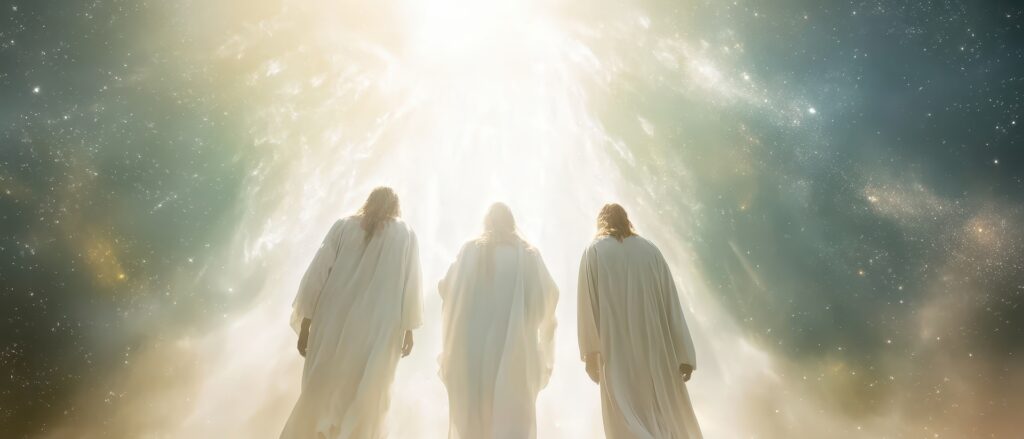
In the closing years of his life, the apostle Peter reflected upon an experience so extraordinary that most men could scarcely comprehend it. He had stood upon a mountain and watched the hidden glory of Christ revealed during the transfiguration. He heard the voice of God thunder, and he, James, the brother of Jesus and John, witnessed the Law and the Prophets standing beside the Messiah in radiant glory.
“And after six days Jesus taketh Peter, James, and John his brother, and bringeth them up into a high mountain apart, and was transfigured before them: and his face did shine as the sun, and his raiment was white as the light. And, behold, there appeared unto them Moses and Elias talking with him.” — Matthew 17:1-3
Yet astonishingly, after all of it, Peter did not point believers toward supernatural experiences as the highest foundation of faith. He pointed them instead toward something he described as even “more sure” — the prophetic Word of God. That statement echoes across every generation of believers with sobering clarity. Peter didn’t build his faith upon spiritual experiences or his personal opinions of Scripture. The mountain confirmed what had already been written in the Law of Moses, the Prophets, and the sacred writings entrusted to Israel. Peter understood that the glory he witnessed did not supersede the Scriptures — the experience affirmed what Jesus had been telling His disciples. Rather than exalting his own experiences, Peter anchored himself in what he called the “more sure word of prophecy.” His confidence rested not in mystical encounters alone, but in the enduring faithfulness of the written Word of God already spoken beforehand through Moses and the prophets.
The hidden glory within Christ was revealed, and Moses and Elijah appeared beside Him — Moses representing the Law and Elijah the Prophets. Both bore witness to the One toward whom the entirety of Scripture had always pointed. The Law and the Prophets stood beside Christ, not as equals, but as witnesses testifying that their fulfillment rested in Him.
Everything written beforehand converged upon this revelation. Jesus wasn’t abolishing the laws and promises of God; He was bringing them to completion. As He Himself declared, “Think not that I am come to destroy the law, or the prophets: I am not come to destroy, but to fulfill.” — Matthew 5:17. Even the voice from heaven redirected attention away from Moses and Elijah and toward Jesus alone. This is my beloved Son, in whom I am well pleased; hear ye him. — Matthew 17:5
In many ways, the transfiguration stood alongside the great revelatory moments recorded throughout Scripture — moments like Moses standing before the burning bush while the voice of God spoke from the fire. The word “transfiguration” comes from the Greek word metamorphoō (μεταμορφόω), meaning to transform, to change form, the outward manifestation of an inward reality. It is the same root from which we derive the word “metamorphosis.” The hidden glory dwelling within Jesus was unveiled. Peter was witnessing something of that same magnitude: divine glory breaking into the natural world, the unveiled presence of God confronting human frailty face to face. Yet this was not the Father Himself being seen, for Scripture declares, “No man hath seen God at any time” (John 1:18). Rather, Peter was beholding the glory of God revealed in His Son—the radiance of the Father’s nature shining through the One in whom all the fullness of God was pleased to dwell.
Yet beneath the visible transfiguration lies a deeper truth. The outward unveiling of Christ’s glory points toward the inward transformation God desires to accomplish within His people. The true transfiguration of the believer is not an outward spectacle witnessed upon a mountain, but the gradual work of God within the heart. It is the process by which the character, mind, and life of Christ are formed in those who follow Him.
The prophets foresaw this inward work centuries before Christ appeared. Through Jeremiah, God declared concerning the New Covenant, “I will put my law in their inward parts, and write it in their hearts” (Jeremiah 31:33). Ezekiel likewise proclaimed, “A new heart also will I give you, and a new spirit will I put within you” (Ezekiel 36:26).
What Peter witnessed for a brief moment upon the mountain was the unveiled glory of Christ. What God seeks to accomplish in His people is the ongoing transformation of the inner man, as His Spirit writes His nature upon the heart and conforms believers to the image of His Son.
Paul echoes this same reality when he writes that believers are transformed inwardly by the Spirit of God: “But we all, with open face beholding as in a glass the glory of the Lord, are changed into the same image from glory to glory.” — 2 Corinthians 3:18 The word translated “changed” is again metamorphoō — the same word used for Christ’s transfiguration upon the mountain.
This reveals something profound. The transfiguration was not merely a display of Christ’s glory for Peter, James, and John to behold externally. It also foreshadowed the inward transformation God intends to work within those who follow Christ — a people progressively conformed to His image through the renewing power of His Word and Spirit.
As Paul wrote elsewhere, “And be not conformed to this world: but be ye transformed by the renewing of your mind.” — Romans 12:2. Once again, the word “transformed” is metamorphoō. The true Christian life is not merely behavior modification or religious observance. It is inward transformation — Christ formed within, the law written upon the heart, and the image of God progressively unveiled within the inner man.
Yet astonishingly, Peter did not direct believers to build their faith upon the memory of supernatural encounters. Instead, he pointed them back to the prophetic Word of God — the lamp shining in a dark place until the day dawns and the morning star rises in the heart. — 2 Peter 1:19
It was an overwhelming, undeniable supernatural encounter. Peter was not relying on rumor, tradition, emotion, or secondhand testimony. He had seen it. He had heard it. He had stood upon the holy mountain as the glory of God surrounded them. Later, he described that moment with absolute certainty: “For we have not followed cunningly devised fables, when we made known unto you the power and coming of our Lord Jesus Christ, but were eyewitnesses of his majesty.” — 2 Peter 1:16
Peter continues, For he received from God honor and glory, when there came such a voice to him from the excellent glory, This is my beloved Son, in whom I am well pleased. And this voice which came from heaven we heard, when we were with him in the holy mount.” — 2 Peter 1:17,18
Peter is not writing as an excitable man intoxicated by spiritual spectacle. By the time he pens these words, age, suffering, failure, restoration, persecution, and years of walking with Christ had humbled him deeply. This was the same Peter who once stepped boldly from the boat only to sink beneath the waves when fear overcame faith. The same Peter who witnessed miracles few men had ever seen, yet later denied Jesus three times before the rooster crowed.
Peter understood something painfully human: spiritual experiences alone do not make a man incapable of unbelief, fear, pride, weakness, or terrible failure. A man may stand near glory one day and tremble before men the next. He may hear truth with his ears yet still wrestle inwardly with doubt, pressure, fear, and the frailty of the flesh.
This is precisely why Peter points believers away from dependence upon external manifestations and back toward the enduring authority of the Scriptures. He had learned through painful refinement that no experience—no matter how supernatural—can substitute for a heart continually anchored in the Word of God. The sure word of prophecy remains the lamp shining in darkness, even as human emotions fluctuate.
The warning is especially relevant in an age fascinated with the supernatural, filled with discussions of disclosure, unexplained phenomena, spiritual experiences, signs, wonders, and competing claims of revelation. Scripture repeatedly cautions believers not to build their faith upon extraordinary manifestations alone, but to test all things in the light of God’s Word. Jesus Himself warned, “For there shall arise false Christs, and false prophets, and shall shew great signs and wonders; insomuch that, if it were possible, they shall deceive the very elect” (Matthew 24:24). The issue has never been whether supernatural events occur, but whether they lead men toward the truth revealed in Christ or away from it. For this reason, Peter directs believers back to the prophetic Scriptures, a foundation more certain than personal experiences, because the Word of God remains unchanged while the claims and voices of men continually rise and fall. Peter had learned through painful refinement that spiritual maturity is not built upon emotional intensity or dramatic moments, but upon obedience, truth, and the enduring faithfulness of God.
One can almost sense Peter reflecting upon the mountain with holy sobriety. He had seen the glory, heard the voice from heaven, and stood within a moment echoing the burning bush, Sinai, and the visions of the prophets. Yet Peter understood something many believers still struggle to grasp: even the most overwhelming supernatural experience cannot replace the enduring authority of the Word of God. And so, instead of exalting the experience itself, Peter gently turns the eyes of the Church away from himself, away from the mountain, and back toward the prophetic Scriptures.
In the very next verse, Peter says something remarkable: “We have also a more sure word of prophecy; whereunto ye do well that ye take heed, as unto a light that shineth in a dark place, until the day dawn, and the day star arise in your hearts.” — 2 Peter 1:19
The phrase “more sure” comes from the Greek word bebaioteron (βεβαιότερον), meaning firm, stable, established, legally guaranteed, trustworthy, or confirmed beyond dispute. Peter is declaring something astonishing. The prophetic Scriptures were not weakened by his experience on the mountain; they were confirmed by it. The written Word of God stood as the enduring foundation even above the emotional weight of an overwhelming supernatural encounter.
When Peter spoke of the “more sure word of prophecy,” he was affirming the Hebrew Scriptures already entrusted to Israel — the Torah, the Prophets, the Psalms, and the sacred writings that testified beforehand concerning Christ. The New Testament canon had not yet been formally assembled as believers know it today. Yet Peter understood that even the glory he witnessed upon the mountain did not replace the written revelation God had already given through the law and prophets. The experience confirmed the Word; it did not supersede it.
Peter had seen Christ transfigured in glory. He had heard the audible voice of God from heaven. He had witnessed Moses and Elijah standing with Jesus upon the holy mountain. Yet Peter directs believers back to the prophetic Scriptures as the stable and immovable anchor for faith. This echoes the ancient testimony of the Psalms: “Thy word is a lamp unto my feet, and a light unto my path.” — Psalm 119:105. The Word was never meant to be treated as a secondary witness beneath human experience. It is the lamp in the darkness, the light by which everything else must be tested.
Peter had experienced the kind of supernatural encounter many believers long for. Yet he still points to the Word as the sure foundation. As Isaiah declared, “The grass withereth, the flower fadeth: but the word of our God shall stand for ever.” — Isaiah 40:8. Jesus Himself prayed, “Sanctify them through thy truth: thy word is truth.” — John 17:17. And the psalmist wrote, “For ever, O LORD, thy word is settled in heaven.” — Psalm 119:89
Peter is not dismissing spiritual experience. He is putting it in its proper order. Experiences may confirm the Word, but they must never become the foundation above the Word. He had seen Jesus glorified. He had seen Moses, representing the Law, and Elijah, representing the Prophets. He had heard the voice of God. And yet he tells us not to build our faith on experiences alone. The Scripture is the sure foundation.
The Morning Star Rises in Your Hearts
Peter says we do well to pay attention to the prophetic Word as a light shining in a dark place, “until the day dawn, and the day star arise in your hearts” (2 Peter 1:19). The “day star” or “morning star” is a title Jesus later applies to Himself: “I am the root and the offspring of David, and the bright and morning star” (Revelation 22:16).
Peter’s message is both practical and profound. Believers are to remain anchored in the Scriptures as a lamp shining in a dark and corrupted world until the darkness gives way to dawn and the light of Christ rises within the heart. The prophetic Word guides, corrects, and illuminates the path until the reality to which it points is increasingly formed within us. The Scriptures do not merely reveal future events; they reveal Christ Himself, preparing His people for the day when faith becomes sight, and the fullness of His life is manifested in those who belong to Him.
The Greek phrase translated “day star” or “morning star” is phōsphoros (φωσφόρος), meaning “light-bringer” or “light-bearer.” It carries the imagery of the first light appearing before sunrise — the breaking of a new day after darkness. Peter is describing an inward illumination where Christ becomes fully alive and revealed within the believer.
The phrase “arise in your hearts” is connected to the Greek word anatellō (ἀνατέλλω), meaning to arise, spring forth, dawn, or give light. Peter is not merely describing an event through emotional excitement. He is speaking of Christ illuminating the inner man. Paul uses similar language when he writes, “For God, who commanded the light to shine out of darkness, hath shined in our hearts.” — 2 Corinthians 4:6 That is inward illumination. That is the light of God breaking into the heart.
This is why Paul could speak of “Christ in you, the hope of glory.” — Colossians 1:27 It is also why he travailed for believers until Christ was formed in them, saying, “My little children, of whom I travail in birth again until Christ be formed in you.” — Galatians 4:19 The morning star rising in the heart is not a shallow religious feeling. It is the inward reality of Christ becoming formed, known, and revealed within the believer.
This is not primarily speaking about the visible Second Coming of Christ at the end of the age. Peter is describing an inward unveiling — the moment when Christ becomes truly alive and revealed within the believer through the illumination of the Spirit and the power of the Word. Paul prayed this same kind of inward reality over the Church when he wrote, “That Christ may dwell in your hearts by faith.” — Ephesians 3:17
This is the difference between merely knowing information about Jesus and experiencing the reality of His life that transforms the inner man. Paul told the Corinthians, “Examine yourselves, whether ye be in the faith; prove your own selves. Know ye not your own selves, how that Jesus Christ is in you…” — 2 Corinthians 13:5 He also told the Ephesians to “be renewed in the spirit of your mind.” — Ephesians 4:23 This is the work of God within a person: the Word shining, the mind being renewed, and Christ rising within the heart.
In other words, a Transfiguration experience is not the goal. An audible voice from heaven is not the goal. A dramatic vision or a “thus saith the Lord” prophecy every week is not the objective. Peter points believers toward something far greater: the rising of the Morning Star within the heart. This is the difference between knowing facts about Jesus and truly knowing Him. It is the gradual unveiling of Christ within the inner man as His life, character, and mind are formed through the work of the Spirit and the truth of God’s Word.
Many Christians today wait for some outward manifestation to validate their faith. Others continually pursue prophetic experiences, emotional encounters, signs, wonders, dreams, visions, or new revelations. Yet Peter—the very man who stood upon the Mount of Transfiguration and heard the voice from heaven—directed believers away from dependence upon extraordinary experiences and back to the enduring authority of the written Word of God. He pointed them to the prophetic Scriptures as a lamp shining in a dark place “until the day dawn, and the day star arise in your hearts” (2 Peter 1:19). Peter’s focus was not upon continually seeking new experiences, but upon faithfully walking in the light God has already given until its work is accomplished within. Paul echoes the same truth when he writes, “My little children, of whom I travail in birth again until Christ be formed in you” (Galatians 4:19). The true work of God is not merely the pursuit of spiritual experiences, but the formation of Christ within the believer through the transforming power of His Word and Spirit.
We live in a time where countless people chase prophetic voices, manifestations, emotional encounters, dreams, visions, supernatural claims, and personalities that promise hidden insight or special revelation. Many run from conference to conference in search of another experience while neglecting the very Scriptures God has already given as the enduring light for His people.
This is not to suggest that God no longer speaks, heals, gives dreams, visions, prophetic insight, or manifests the gifts of His Spirit. Scripture testifies that these gifts were given for the edification of the body of Christ, and there is no reason to believe God has ceased working in these ways. Yet the purpose of spiritual gifts has never been to exalt the man or woman through whom they operate. Their purpose is to glorify Christ, strengthen His people, and direct attention back to God rather than to the vessel being used. When gifts become a means of building personal platforms, cultivating celebrity, or drawing disciples after men, they have departed from their intended purpose.
The New Testament consistently points believers beyond the messenger to the One being revealed. Genuine spiritual gifts should produce humility rather than self-promotion, maturity rather than dependence, and a deeper love for Christ and His Word rather than fascination with personalities and experiences. The question is not whether God still works supernaturally. The question is whether those manifestations are leading people into a deeper knowledge of Christ and conformity to His image. Even the most extraordinary gift remains secondary to the transforming work of God’s Spirit through His Word in the life of the believer.
Peter’s words cut through that confusion with sobering clarity. The man who stood upon the holy mountain, who saw the glory of Christ unveiled before human eyes, still directed believers back to the sure word of prophecy. Why? Because Peter understood the frailty of man. He knew how quickly emotions could shift, how easily fear could overtake conviction, and how vulnerable people remain to deception when untethered from the truth of God’s Word.
This is why Scripture repeatedly calls believers to discernment, testing, sobriety, and spiritual maturity. Paul himself warned believers not to surrender their discernment to the authority of personalities, movements, or charismatic teachers. He commended the Bereans because they searched the Scriptures daily to test whether even apostolic teaching aligned with the Word of God: “These were more noble than those in Thessalonica, in that they received the word with all readiness of mind, and searched the scriptures daily, whether those things were so.” — Acts 17:11
Paul also warned the Church that spiritual deception would increase, writing, “Prove all things; hold fast that which is good.” — 1 Thessalonians 5:21 The apostle John likewise exhorted believers: “Beloved, believe not every spirit, but try the spirits whether they are of God.” — 1 John 4:1
The danger Peter understood is still with us today. Many so-called prophetic voices build followings through private interpretations, sensational claims, emotional manipulation, or self-exalting revelations detached from the full counsel of Scripture. Yet Peter immediately follows the “more sure word of prophecy” by warning that “no prophecy of the scripture is of any private interpretation.” — 2 Peter 1:20
The true servant of God understands that the ministry entrusted to him was never intended to magnify the messenger but the One who sent him. His purpose is not to gather followers around his personality or elevate personal revelations above the written Word, but to faithfully direct hearts toward Christ. Genuine spiritual leadership leaves people more captivated with Jesus, more grounded in Scripture, and more committed to lives marked by humility, holiness, and obedience to the will of God.
Believers are not called to blindly follow impressive personalities, eloquent communicators, or those who continually claim supernatural authority. We are called to follow those whose doctrine remains anchored in Scripture, whose lives demonstrate submission to Christ, and whose character reflects the fruit of the Spirit.
Peter’s message is ultimately a call to spiritual sobriety. Human beings are fragile. Experiences can stir powerful emotions while leaving pride, fear, unbelief, and immaturity untouched. Only the continual work of God’s Word and Spirit can transform the inner man. The invitation remains the same: open the Scriptures, seek Christ sincerely, test all things carefully, and allow the lamp of the Word to shine in the hidden places of the heart until the Morning Star rises within.
In many ways, the transfiguration itself becomes a foretaste of the inward work God desires to accomplish within every believer pressing toward the high calling of God. What Peter witnessed outwardly upon the mountain foreshadows what God intends to work inwardly through the Spirit and the Word — Christ revealed within, the mind renewed, and the heart progressively transformed into His image.
Believers themselves become living tabernacles for the glory and presence of God. As Paul wrote, “Know ye not that ye are the temple of God, and that the Spirit of God dwelleth in you?” — 1 Corinthians 3:16 The New Covenant points toward far more than outward religion or external observance. It points toward God dwelling within His people, His laws written upon the heart, and His character progressively formed within the inner man.
Peter himself later described believers as those who become “partakers of the divine nature” (2 Peter 1:4). He was not teaching that men become gods, but that through Christ they are brought into fellowship with the life of God, transformed by His Spirit, and progressively conformed to His likeness. This divine work begins at the new birth. As Paul wrote, “if any man be in Christ, he is a new creation” (2 Corinthians 5:17). The Greek phrase is kainē ktisis (καινὴ κτίσις), meaning not merely an improved version of the old, but a new creation or a new kind of being brought forth through union with Christ.
From that moment forward, the life of Christ begins to unfold within the believer. The same glory that was revealed outwardly upon the Mount of Transfiguration is destined to be revealed inwardly through the transforming work of God’s Spirit. What begins as a seed at the new birth grows through obedience, renewal, and spiritual maturity as believers are changed into the same image from glory to glory. The process is not completed in this present age, but moves steadily toward its appointed fulfillment when mortality puts on immortality, and corruption puts on incorruption. The transfiguration Peter witnessed upon the mountain was a glimpse of Christ’s unveiled glory. The transfiguration experienced by the believer is the ongoing work of God conforming many sons and daughters to the image of His Son until, at last, faith becomes sight and the work of transformation is complete. www.LiveandGrowonPurpose.com
About the Author Mark Thomas
Mark is a visionary leader and writer who helps others discover their God-given purpose. See his teaching series www.LiveandGrowonPurpose.com