
- You are here:
- Home »
- Leadership »
- The 7th Gift: The Mind of Christ and Pattern Recognition
The 7th Gift: The Mind of Christ and Pattern Recognition
Created Minds and Constructed Intelligence — Learning, Patterns, and the Difference Between Detection and Understanding
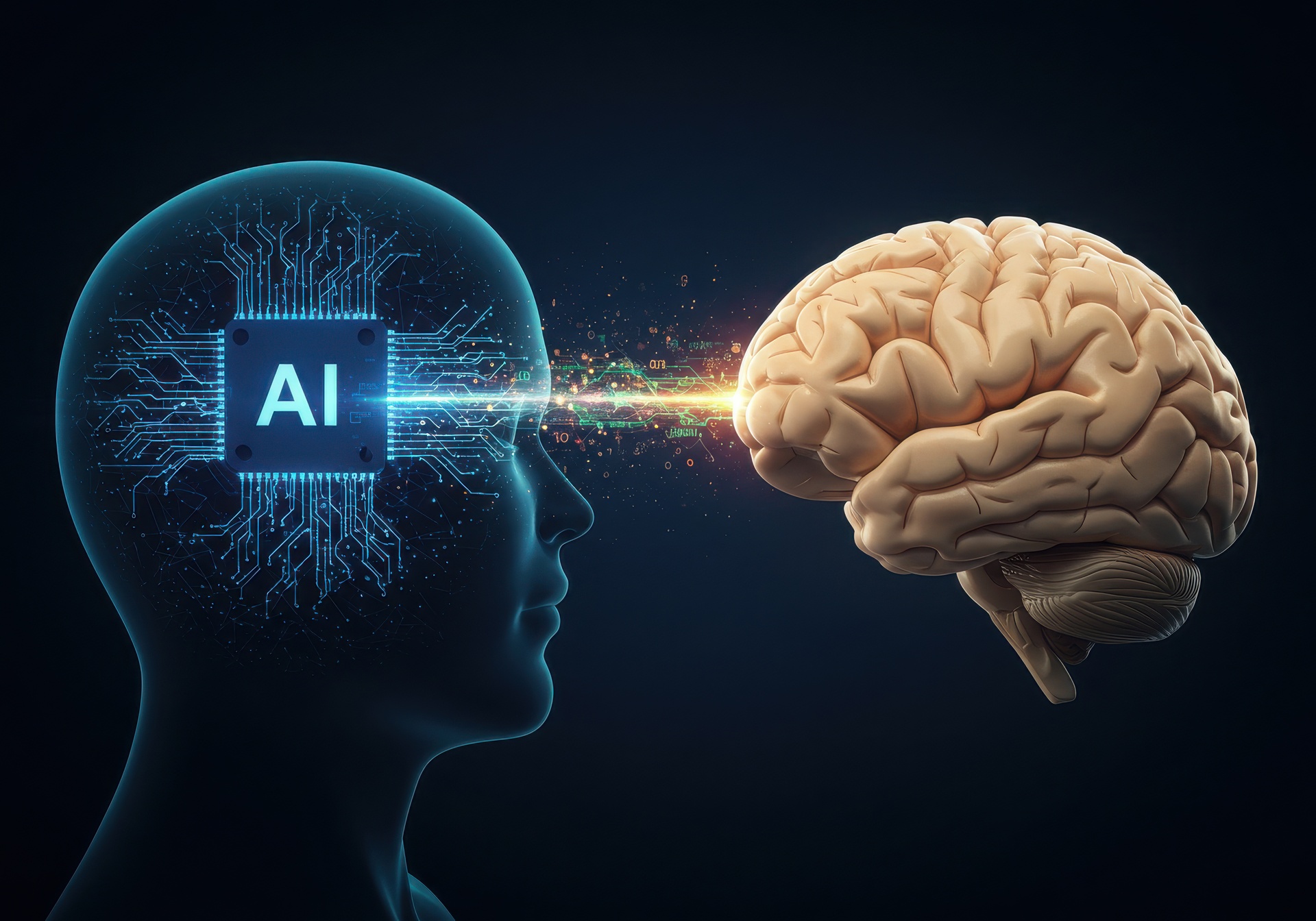
This distinction frames everything that follows. Humans and machines can both recognize patterns, but they do not arrive at the same meaning. Artificial intelligence detects structure through scale, speed, and statistical correlation. The human mind integrates patterns through spiritual and lived experience, judgment, memory, and responsibility. One can identify what is present. The other must decide what it means, why it matters, and how it should be stewarded. Detection answers what aligns. Understanding answers what is true.
Detection scales efficiently. Understanding carries moral weight. Confusing detection with understanding collapses this distinction—and that collapse carries consequences not only for the systems we build but also for how authority, trust, and responsibility are transferred.
Reality does not announce itself in finished conclusions. It unfolds. Events precede explanations. Signals appear before outcomes. Meaning forms slowly, often invisibly, until suddenly it feels obvious. This is not accidental. The world operates through patterns because order precedes comprehension.
Pattern recognition is the mind’s capacity to detect relationships across time, symbols, behaviors, systems, and cause-and-effect chains. At a mechanical level, it is how the brain survives complexity. Faced with overwhelming sensory input, the mind compresses reality by identifying repetition, rhythm, and structure. It builds internal models that allow anticipation rather than constant reaction. This is why recognition often feels immediate and wordless. The brain is not calculating—it is matching. This same mechanism now undergirds artificial intelligence. AI systems do not “think” or “understand”; they ingest massive datasets, detect statistical regularities, identify correlations, and generate predictions based on pattern frequency. What the human brain does intuitively and relationally, AI does mechanically and at scale—recognizing structure without comprehension, correlation without meaning, and prediction without moral judgment. AI’s power comes not from insight, but from accelerated pattern detection divorced from wisdom.
At this point, the limits of artificial intelligence must be stated plainly. No matter how advanced a system becomes, it does not possess emotion, conscience, soul, or spirit. These are not emergent properties of scale or complexity; they are qualities intrinsic to living, created beings. Claims of self-aware or sentient artificial intelligence often confuse increasingly sophisticated simulation with actual interior life. A machine may model empathy, mirror moral language, or optimize for outcomes labeled as “good,” but it does not experience guilt, compassion, love, or responsibility. Any appearance of conscience in such a system is either borrowed from the human minds that trained it or projected onto it by those interacting with it.
The only theoretical pathway toward something resembling conscience within an artificial system would require an external source: either the direct integration of a human mind through transhuman merging—where biological cognition becomes the host and conduit for machine processes—or the influence of a non-human spiritual agency. In both cases, the machine itself remains empty. It does not generate moral awareness; it houses or channels it. This distinction matters because it exposes the danger not of intelligent tools but of misplaced attribution—treating constructed systems as moral agents and surrendering judgment to entities that cannot bear moral accountability.
But pattern recognition alone does not guarantee truth.
The exact cognitive mechanism that allows a person to see emerging structure can also mislead. The brain is so efficient at finding patterns that it will sometimes impose them where none exist. This is why pattern recognition must be tested, not trusted blindly. Insight without calibration becomes speculation. Correlation without grounding becomes an illusion. This limitation is mirrored in modern language models—such as ChatGPT, Grok, and others—which operate by extending the dominant narratives embedded in their training data. These models reflect what search engines, mainstream sources, and aggregated consensus have already framed as the story. They do not independently step outside that narrative unless prompted by a human who already understands the deeper structure behind it. In other words, the machine can extend a pattern, but only a discerning mind can challenge it, redirect it, or ask the question the data itself does not know to ask.
Scripture anticipates this tension.
Paul writes, “The natural man does not receive the things of the Spirit of God… because they are spiritually discerned” (1 Corinthians 2:14). This is not a rejection of reason. It is a statement about levels of perception. The natural mind recognizes structure; the spiritual mind judges source and direction. One sees what is forming. The other discerns what is behind it.
Mechanically, strong pattern recognizers process information holistically rather than sequentially. They hold multiple variables at once. Instead of isolating facts, they sense relationships. They detect convergence—independent signals pointing toward the same trajectory. This is why they often see outcomes forming long before consensus appears. To others, this feels abstract or premature. To the pattern recognizer, it feels inevitable.
Scripture describes this same distinction using different language. “We have the mind of Christ” (1 Corinthians 2:16). The mind of Christ is not superior intelligence; it is aligned perception. It is the ability to judge reality not merely by appearance, momentum, or logic, but by truth, origin, and outcome.
Jesus consistently demonstrated this. Crowds followed Him, but He did not entrust Himself to them. Leaders quoted Scripture, but He discerned hypocrisy. Popularity increased, yet He withdrew. John records, “Jesus did not entrust Himself to them, for He knew all men… He knew what was in man” (John 2:24-25). This was not cynicism. It was discernment operating alongside awareness.
At the cognitive level, this is the difference between recognizing behavioral patterns and understanding motivational drivers. It is precisely here that Scripture issues its strategic warning: “Be not ignorant of the schemes of the enemy” (2 Corinthians 2:11). Pattern recognition allows those schemes to be seen as they repeat; discernment determines whether what is forming is merely effective or spiritually destructive. A system can appear benevolent while moving toward control. A movement can look righteous while producing bondage. A technology can promise convenience while reshaping power. Pattern recognition detects the structure. Discernment evaluates the intent.
This distinction becomes critical when applied to history.
History does not repeat in identical events, but it repeats in patterns: consolidation of power, centralization of authority, moral justification for control, and eventual collapse under its own weight. Empires rise claiming peace and order. They fall because they confuse stability with righteousness. Pattern recognition allows one to see these cycles. Discernment reveals when a system is repeating an ancient strategy under a new name.
Scripture warns, “Be not ignorant of the schemes of the enemy” (2 Corinthians 2:11). The word “schemes” implies structure, strategy, and repetition. Deception is rarely chaotic. It is organized. It scales. It adapts. And it often presents itself as progress.
This is why discernment appears among the gifts of the Spirit.
The 7th Gift
In 1 Corinthians 12, Paul lists the gifts of the Spirit, including “the discerning of spirits”—diakrisis pneumaton, the 7th gift of the Spirit. The word diakrisis means to separate, judge, and distinguish between things that appear similar but are fundamentally different. Discernment does not create power; it governs power. It stands watch over wisdom, knowledge, faith, prophecy, healing, and revelation.
The “Spiritual Mechanics” of discernment mirror a necessary cognitive function: model validation. Any system that generates predictions must also test them. Without validation, errors compound. Discernment is the validation layer of spiritual perception. It prevents false positives. It distinguishes an accurate signal from the noise.
This is why discernment is indispensable to the fivefold offices described in Ephesians 4. Apostles build systems. Prophets speak insight. Evangelists mobilize momentum. Pastors protect people. Teachers frame understanding. Without discernment, each gift can function effectively while still producing harm. Discernment ensures alignment with truth rather than success alone.
Hebrews explains that discernment matures through use: “Solid food is for the mature, who by constant use have trained themselves to discern good and evil” (Hebrews 5:14). This mirrors cognitive reality. Pattern recognition sharpens through feedback over time. Models improve only when tested against reality. Discernment grows as the ego diminishes.
This dual-layer dynamic becomes most visible in finance and technology.
Modern financial systems operate on abstraction. Value is removed from tangible reality and represented symbolically. Digitization accelerates this process. Tokenization, automation, and algorithmic decision-making create efficiency—but also distance. Pattern recognition can identify where systems are converging: liquidity consolidation, rail standardization, and trust centralization. Discernment asks whether these systems serve stewardship or control.
Technology amplifies whatever drives it. Artificial intelligence recognizes patterns at scale, but it does not discern meaning. It detects correlation, not morality. It can predict behavior without understanding the consequences. This is why spiritual discernment cannot be replaced by mechanical intelligence. Data reveals what people do. Discernment reveals what is being shaped.
Paul warned that deception would not come as obvious darkness. “Satan himself masquerades as an angel of light” (2 Corinthians 11:14). In modern terms, deception often arrives as optimization, convenience, safety, and progress. Pattern recognition sees the architecture. Discernment judges the spirit.
James describes wisdom from above as “pure, peaceable, gentle, open to reason, full of mercy and good fruit” (James 3:17). This is not poetic sentiment—it is a diagnostic test. True discernment produces life. False alignment produces efficiency without compassion, order without justice, power without humility.
Culture itself is shaped by pattern recognition. Narratives repeat. Language shifts. Symbols are repurposed. What was once shocking becomes normalized. What was once sacred becomes trivial. Pattern recognition reveals the drift. Discernment reveals the destination.
This is why Jesus repeatedly said, “If anyone has ears to hear, let him hear.” The information was public. The recognition was conditional. Not everyone wants coherence. Many prefer certainty, comfort, and belonging. Pattern recognition requires patience. Discernment requires surrender.
The mind of Christ integrates both layers. It does not reject reason; it redeems it. It does not deny patterns; it judges them. It sees systems forming before they dominate and tests spirits before they deceive.
Pattern recognition answers what is becoming visible. Discernment answers whether it aligns with truth.
Together, they protect against being impressed by movement while missing meaning.
This is not mysticism. This is not paranoia. This is disciplined perception anchored in truth.
And it is why Scripture calls some to watch, some to warn, and some to see—not for their own elevation, but for the preservation of life.