- You are here:
- Home »
- Leadership »
- Ripple Through Time: The Fugger Legacy and Rise of the New Financial Order

Ripple Through Time: The Fugger Legacy and Rise of the New Financial Order

It’s been almost three years since this video was released. And we’re just getting started.
For over a century, the architects of modern finance—draped in tailored suits and seated in mahogany-lined boardrooms—wielded debt as their weapon of choice. With it, they subdued nations, manipulated markets, and gradually redefined what sovereignty meant.
They stripped power from the people and handed it to a ruling class that engineered a system to protect their interests. What once resembled free enterprise was rigged and quietly governed by those who owned the rules.
But a silent tremor is already shaking the foundations. A digital storm is gathering—its first wave, a ripple beneath the surface, a tsunami triggered by a tectonic shift. The movement is subtle, but it’s real—an undercurrent of transformation. Few will notice until it breaks across the financial shores.
The Internet of Value, sparked by permissionless code, is replacing banking vaults with private custody. It’s transferring frictionless value. No gatekeepers. No delays. No need to rely on a middleman to settle the score.
The old world isn’t being demolished, it’s being quietly transitioned from the old to the new. Its structures are slowly absorbed, repurposed, and invited to cross the bridge into something new. A new digital order is quietly taking shape. It’s not relying on fanfare or flashing headlines; instead, it’s being woven seamlessly into the background of everyday systems.
This isn’t speculation. It’s happening now on the Internet of Value. It’s about utility, how liquidity becomes borderless. How does settlement become instant? And value, once trapped, may flow freely through distributed ledgers designed for speed and instant verification.
Behind the scenes, central banks, Silicon Valley giants, and global think tanks have joined forces. No longer just stewards of fiat currencies, they are becoming the architects of programmable money. A new financial order is being laid—block by digital block. With well over a thousand banking NDAs and more than a decade of institutional pilots, the groundwork for this transformation has been quietly underway for years. And while most of the world sleeps—lulled by apps, headlines, and promises of financial inclusion—a hidden transition is unfolding. It’s not just a change in currency. It’s a redefinition of what money itself is.
The question isn’t whether this shift will happen.
It’s not just about what’s being built—it’s about who will control it. The Internet of Value is powered by blockchain, where value moves across decentralized rails and trust is enforced by code, not institutions. For now, it runs on consensus, not coercion. But make no mistake: powerful forces are positioning themselves to steer it. Because if you control the rails, you control the future.
They don’t want you to understand what’s happening. Their legacy system was never designed to serve people like you and me—it was built to preserve wealth and power for the few.
Unfortunately, most people won’t take the time to understand what’s happening. They’ll dismiss it as a conspiracy theory or question its validity. Worse, they’ll trust voices like Jim Cramer—or others strategically placed to protect the interests of the global elite. BlackRock CEO Larry Fink, who once mocked crypto and spoke in riddles like central bank economists. They weren’t trying to educate the public; they were guarding the system.
Now? He’s flipped. Fink once called crypto “speculative noise,” but today he’s clamoring for the tokenization of real-world assets—stocks, bonds, real estate, and more—as the next phase of global finance. The real narrative is not being handed to the public for a reason. Behind closed doors, banks and institutions are already adopting this new system.
The signs are everywhere for those willing to look:
- Governments are appointing “Crypto Czars” and “AI Czars” to oversee the digital transition.
- Central banks are piloting digital currencies and stablecoins behind the scenes.
- Financial giants that once dismissed crypto are now pushing for the tokenization of real-world assets.
- Legacy networks, such as SWIFT, are integrating blockchain infrastructure to remain relevant.
- The IMF and BIS are publishing reports on programmable money, which are often masked in technical jargon.
- Major retailers and payment processors are quietly testing crypto payment rails.
- Strategic custody solutions are being developed to secure digital assets at scale.
- Government bonds and treasuries are being structured for tokenized issuance and instant settlement.
- Tokenized derivatives and financial instruments are being piloted for global trade and compliance.
- Institutional liquidity layers are forming through unified access to lending, settlement, and brokerage infrastructure.
- The underlying financial architecture is being rebuilt—block by block—to support a programmable, global Internet of Value.
These are just the tip of the iceberg. What’s happening is not speculative—it’s systemic. And it’s unfolding in real time. A transformation is reshaping the global infrastructure beneath our feet. Institutions like the IMF, BIS, and the Federal Reserve deliberately cloak their language in technical jargon—not to inform, but to obscure. It’s not just complicated; it’s hidden. And it’s meant to be. If you’ve already invested in these assets, then you’ve beaten the banks to the punch—and there’s still time for others to do the same. But it requires action, not hesitation.
I’ve been on the wrong side of history before. During the dot-com crash, I sold my shares in companies like Amazon, Microsoft, Dell, and Google—only to watch them soar exponentially higher. After the 2008 real estate collapse, I made the same mistake—pulled out too soon and missed the rebound. Looking back, I see it wasn’t just bad timing. It was a lack of knowledge, patience, and vision.
The opportunity is here. It’s real. Learn. Ask questions. Seek truth. Most of all, ask the Lord to guide your decisions. My journey includes both failure and success, but if my lessons help you pause and prepare, then it’s worth it. Don’t just watch history happen—position yourself in it.
Disclaimer:
I am not a licensed financial advisor, attorney, or investment professional. I do not offer financial advice, and I do not receive compensation, commissions, referral fees, or any other form of monetary gain from the information I share. This content is not monetized, and I have no products, services, or affiliate links tied to this research. I’m simply a person who loves history, asks tough questions, and enjoys connecting the dots between the past and the present. Everything I share comes from over ten years of personal research and a passion for truth. Please do your due diligence and consult with qualified professionals before making any financial or legal decisions. Please ensure that your professional advisors also read this article.
The Internet of Value
A quiet revolution is reshaping global finance, not driven by hype coins or speculation, but by utility-based blockchain projects—technologies designed to solve real-world problems, such as cross-border payments, asset tokenization, and interoperability between banks.
At the center of this shift are technologies like Ripple, along with other purpose-built protocols, building the foundation for an Internet of Value—a system where assets move as freely and instantly as information. This transformation goes far beyond payments. It’s about the tokenization of real-world assets: gold, silver, oil, natural gas, real estate, and rare earth elements. These commodities are being digitized, fractionalized, and moved onto blockchain networks where they become liquid, programmable, and globally accessible.
What is tokanization? Let’s bring it home. Imagine owning a prized 1952 Mickey Mantle card—once tucked away in a cigar box from your childhood in the ’70s, now worth over $12 million. Through the power of tokenization, this iconic piece of Americana can be transformed from a nostalgic keepsake into a living, breathing financial asset. Digitized and divided into blockchain-based tokens, the card can be fractionally owned by investors worldwide. Instead of gathering dust, it generates opportunity—tradable, collateralizable, and capable of unlocking capital without ever leaving your possession. In this new era, even a memory from your youth can fund your future.
Projects like Quant (QNT) are helping build a bridge between the old financial system (TradFi) and the new one (DeFi). Major players, including central banks, investment firms, and money managers, are beginning to utilize advanced blockchain technology to transfer funds and assets more efficiently and securely. Tools like RippleNet enable these systems to communicate with each other and settle transactions instantly.
This is changing what we think of as “money.” In the past, we trusted governments to manage paper currency, such as the U.S. dollar. But now, that trust is shifting to systems that are transparent and built on tangible assets. Instead of printing money out of nowhere, the new economy is backing digital money with assets that hold value—such as gold, real estate, or other tangible assets—then transferring that value through code, not cash.
The new regulatory environment
For years, the cryptocurrency industry operated like the Wild West—largely unregulated, fast-paced, and prone to volatility. But that’s changing. In the United States, Congress recently passed the GENIUS Act (Guiding the Evolution of Innovations in U.S. Securities), aiming to establish a more transparent regulatory framework for digital assets and clarify the roles of the SEC and CFTC. The bill offers definitions for digital commodities vs. securities and grants oversight authority while promoting innovation. Meanwhile, the forthcoming Digital Asset Infrastructure Bill is expected to regulate the issuance and operation of stablecoins further, requiring issuers to maintain 1:1 reserves in audited, verifiable real-world assets, such as cash or short-term Treasury securities.

This evolution, aimed at restoring trust in the financial system, aligns with the post-2008 crisis reforms and the global rollout of updated Basel III regulations. These reforms were designed to ensure that financial institutions maintain sufficient high-quality capital and liquid reserves to endure systemic shocks. They raised the bar on what qualifies as reserve capital, emphasizing transparency, real-world asset backing, and risk mitigation—critical elements in preventing another global financial collapse, such as the one that shook the world in 2008.
Now, similar principles are extending into the digital finance space. Just as banks are compelled to hold tangible, liquid assets as a buffer against systemic risk, upcoming legislation will likely require stablecoin issuers to meet strict reserve requirements. This presents a challenge for some existing stablecoins—particularly those under scrutiny for issuing tokens without fully backed reserves—making compliance with new regulations unlikely. At the same time, traditional banks are still required to maintain Nostro/Vostro accounts—pre-funded balances held across correspondent banks to facilitate settlement. These legacy practices are capital-intensive, tie up trillions in dormant capital, and introduce costly delays.
But that model is on the verge of disruption. RippleNet’s global liquidity rails, powered by XRP as a bridge asset, are designed to eliminate the need for Nostro/Vostro. With On-Demand Liquidity (ODL), institutions can settle cross-border payments in seconds, reducing costs, increasing speed, and improving security. There’s no need to pre-fund accounts in foreign currencies. Instead, XRP enables instant conversion and delivery, unlocking trapped capital and facilitating seamless value transfer across borders in real-time.
Don’t See Yourself as a Spectator
We can choose to be active participants in this rapidly unfolding era of exponential change. Financial innovation is accelerating, and whether we engage or resist, the system is moving forward, with or without our consent. The emergence of a centralized global order—a one-world economy rising in the name of peace and safety—may be echoing what Scripture has long foretold. For those with eyes to see, these aren’t just innovations. They are indicators—signposts on a far greater prophetic timeline.
But we are not called to serve the systems of this world, for our citizenship is from above. Every moment counts. This is a divine mandate to awaken, to discern, and to anchor ourselves in truth, before the momentum of this age overtakes us unaware.
Tectonic Shifts: The Rise of a New Financial Order
It began with a fracture—subtle, silent, deep beneath the surface of the global financial order. Hidden in shadow, this unseen break in the foundation of the legacy system marked the beginning of a slow unraveling. The world did not notice. But those with eyes to see could sense it. What started as faint tremors has since become a sweeping ripple, gathering force, stretching across borders and oceans, swelling into a tsunami of change pressing against every shore.
For ages, unseen hands have gripped the levers of wealth and control—families bound by blood and secrecy. Ancient houses, whose names still carry the weight of influence, passed their dominion down through generations. To the common man, these were not empires built on honor—they were debt lords. Through central banks, shadow treaties, and the manipulation of currency itself, they extracted untold quadrillions—blood money born of war, tyranny, and manufactured scarcity. Entire nations became pawns. Entire generations yoked to systems they neither chose nor understood.
Their legacy system was not built to serve, but to bind—golden chains of prosperity for the elites. Beneath the surface of global commerce lay a great lie: that freedom could be found in a world ruled by Mammon. But the fracture has exposed what was long concealed. The foundations are adapting and changing. A new system is emerging as a vibrant marketplace with numerous opportunities.
For those with discernment, God’s warning is clear: Not all transformation means is for the good of freedom, and not every image clothed in light is pure. Some are called to watch. Others to warn. And there are those being positioned to lead—to steward the spoils and reap a harvest of souls amid one of the most significant transfers of ancient wealth in history.
We are witnessing a metamorphosis—a sweeping transformation of government, media, science, medicine, finance, education, and even religion—all unfolding beneath the rising influence of artificial intelligence. Once hidden in the background, AI now guides decisions, curates information, and quietly steers the systems that shape our world. Cloaked in promises of progress and precision, it presents an artificial façade of perfection. On the surface, it appears radiant, streamlined, intelligent, even beautiful. But beneath the shimmering glow lies something else entirely. This is no chaotic upheaval. It is unfolding with eerie precision—surgically, silently, and unnoticed by most.
The traditional pillars of finance—central banks, fiat currencies, and institutional systems—are not collapsing; they are being reconstructed. It is not chaos—it is choreography. As one world fades, another rises on foundations that were laid decades ago.
For believers in Christ, the question remains: Who is writing the code? Who is shaping the rules? And whose image will be stamped on this new creation? Could this be the very system that will one day seek to enslave us? It rises, like the Phoenix, unstoppable—set rise out of the ashes.
Crypto and AI Czar
Our government doesn’t just observe technological shifts—it appoints czars to manage them. While not officially titled, tech entrepreneur and venture capitalist David Sacks has emerged as a de facto thought leader in the AI and crypto space, advising key figures and shaping the national conversation around digital sovereignty. Sacks was part of the legendary “PayPal Mafia”—a circle of early tech pioneers that included other notable figures, such as Trump supporters, Elon Musk, and Peter Thiel, who have redefined the digital landscape with their respective companies. President Trump’s alignment with voices like Sacks signals the urgency and seriousness with which these emerging technologies are being addressed at the federal level.
Artificial Intelligence is not merely assisting this transition—it’s automating it. And soon, it will control it. Silent algorithms now execute trades, monitor transactions, predict behavior, and enforce compliance. Code is replacing policy. Smart contracts are replacing paper. AI and machine-driven logic are becoming the new gatekeepers.
Artificial Intelligence is not merely assisting this transition—it’s automating it. And soon, it will control it. Silent algorithms now execute trades, monitor transactions, predict behavior, and enforce compliance. Code is replacing policy. Smart contracts are replacing paper. AI and machine-driven logic are becoming the new gatekeepers.
It’s not just a system upgrade—it’s an autonomous restructuring of global power in real time. What began as an underground wave is now a swelling, concentric ripple. The force is undeniable and unstoppable. A digital tsunami—nearly invisible to the average person—is approaching the shores of international finance and governance. And when it hits, it won’t just impact institutions—it will touch every household, every individual, every soul on the planet.
The question isn’t whether it’s coming. The question is: Are you prepared to navigate it, or will it navigate you?
The legacy institutions, once kings of a former age, do not stand surprised as the tide surges—they remain measured and calculated. This shift hasn’t caught them off guard. Its foundations were laid long ago, the result of strategies unfolding quietly over decades. Their wealth—centuries of dominion through gold, oil, land, and political alliances—is now being digitized and absorbed into the emerging framework. The true architects remain hidden, operating behind layers of secrecy and control. Only the lower tiers of insiders—government policymakers, mid-level bankers, and institutional actors not entirely privy to the broader scope—have stirred with concern. Bound by non-disclosure agreements and need-to-know directives, they’ve been left to navigate the rollout with limited visibility and constrained authority.
But that’s beginning to change. The tremors beneath the surface are producing visible waves. The once-distant tsunami is revealing itself, reshaping markets, policies, and the very structure of global finance. What was once abstract is now unfolding in real time. The new system, the internet of value, is no longer coming… It’s here.
This is more than innovation—it is prophetic convergence. A global system is quietly being constructed, offering convenience in exchange for control. At its core is a rapidly evolving financial infrastructure—borderless, programmable, and designed to override national sovereignty in the name of efficiency and safety.
The layers are stacking: surveillance, digital ID, programmable currency, and algorithmic governance. Piece by piece, the architecture of control is being laid out, aligning with what the biblical prophets warned would one day emerge: a global government.
Massive Developments Hidden in Plain Sight
The broader public remains anesthetized, distracted by the noise of daily life, while innovation and the most significant wealth transfer in history gather momentum. In July 2025, a seismic shift was announced: BNY Mellon and Ripple entered a groundbreaking partnership. BNY Mellon will hold reserves backing Ripple’s RLUSD stablecoin—a digital token engineered to streamline currency exchange and serve as the foundation for tokenizing trillions in custodied assets.
Ripple is quietly becoming the digital backbone of global finance, embedding itself at the infrastructure level. Its RippleNet software is now integrated into over 300 banks and institutions, powering real-time, cross-border payments, digital asset issuance, and sovereign digital currency infrastructure. Here are some of the big names:
- JPMorgan Chase – exploring blockchain integrations to maintain dominance in global liquidity.
- Bank of America – long-rumored partner now confirmed to be utilizing RippleNet behind the scenes.
- Wells Fargo – implementing RippleNet protocols to modernize settlement architecture.
- BNY Mellon – now custodian for Ripple’s RLUSD, tokenizing real-world assets at scale.
- Sumitomo Mitsui (SMBC) – a central Japanese bank using RippleNet for cross-border payments.
- Shinhan Bank – a South Korean leader in blockchain innovation, with RippleNet already active.
- Mizuho Bank is working to integrate Ripple’s liquidity solutions into its global corridors.
- Emirates NBD – facilitating digital currency flows across the Middle East using Ripple’s technology.
While the world sleeps, the rails of the next global financial order are being laid. Ripple—through XRP, its enterprise-grade stablecoin RLUSD, and the institutional infrastructure of RippleNet—is positioning itself as the underlying liquidity layer of a new economic system: faster, programmable, and interoperable by design.
In July 2025, the U.S. passed the GENIUS Act, signed into law by President Trump, establishing the first federal framework for stablecoins. Issuers must now be fully backed by liquid reserves, undergo monthly audits, and operate under a federal charter or trust license. Ripple’s RLUSD not only complies—it leads the way. Supported by U.S. Treasuries and custodied by BNY Mellon, RLUSD has earned an “A” rating from independent agency Bluechip. By comparison, USDC holds a B+, while Tether (USDT) got a big fat D, flagged for opacity and regulatory risk.
As trillions of tokenized assets seek compliant and trusted rails, the choice becomes clear. RLUSD, built on RippleNet, is poised to become the default settlement layer for institutional finance. With it, trillions are set to flow across Ripple’s global network, reshaping the future of money.
Ripple applies for a national banking license and a Federal Reserve master account.
Ripple is positioning itself to operate as a federally regulated institution with direct access to central bank systems. This is no accident—it’s the next step in a long-orchestrated plan. BNY Mellon’s embrace of RLUSD marks a turning point in institutional adoption. In a July 2025 interview on CNBC’s Squawk Box, Ripple CEO Brad Garlinghouse was conservative when he said, “Many people think [the stablecoin market] will reach $1 to $2 trillion in a handful of years,” calling the growth “profound.” As traditional finance yields to tokenization, BNY Mellon now stands at the forefront of a new financial era—built on the rails of RippleNet, with trillions in assets soon to be tokenized and held in custody.
Web3 and the Internet of Value
The new economy is being forged on the frontier of Web3—the Internet of Value. However, this revolution did not emerge overnight. It is merely the latest wave in a much older current—a digital evolution unfolding across decades, each era rising like a kingdom, flourishing, then giving way to the next.
Web 1.0, remembered as the Static Web (1990–2004), was the dawn. A realm of read-only scrolls written in code, it offered the world its first portal to open information. Early architects, such as Tim Berners-Lee, who created the World Wide Web in 1989 from the halls of CERN, laid its foundations. But in those early days, the Web was a silent library—its knowledge accessible, but rarely interactive.
Then came Web 2.0, the Social Web (2004–2020)—a more vibrant but volatile era. It ushered in an era where users became creators, where platforms like Facebook, YouTube, and Twitter promised connection but harvested control. Founders like Zuckerberg and Dorsey, among others, built towering platforms—shimmering citadels of communication. Yet behind the shine, these strongholds became central powers, and the people—once participants—became the product. Their thoughts, behaviors, and identities were quietly mined, traded, and shaped.

Now, we enter Web3.0—the Internet of Value, a vision coined by Ripple and set in motion as early as 2010, when Ripple’s founding team, including David Schwartz, connected with Canadian engineer Ryan Fugger, the original architect of a decentralized credit system called RipplePay. Fugger’s ideas, combined with the cryptographic innovations that followed, became the foundation for a new kind of internet—one where value could move as freely as information. What began as a fringe vision quietly evolved through the XRP Ledger, Interledger Protocol, and RippleNet, becoming the rails upon which today’s financial transformation rides. This new digital frontier is defined by ownership, decentralization, and interoperability, where borders blur and code replaces trusted intermediaries.
This realm is not ruled from ivory towers, but built in the code by pioneers and cryptographers whose names few know but whose hands are shaping tomorrow. Among them, David Schwartz, Chief Cryptographer at Ripple and co-inventor of one of the earliest patents for distributed ledger technology alongside him, builders like Gavin Wood, who coined the term “Web3,” and Jed McCaleb, co-founder of Ripple and later Stellar, are forging the rails of a future unbound by legacy systems.
Web3 is not evolution—it is a quiet revolt—a reclaiming of what was lost in the age of centralization. Like Silicon Valley reborn under a different banner, these builders aren’t merely launching apps—they are laying the groundwork of a new civilization. Blockchain, AI, biotech, and quantum rails are converging into a digital tapestry that could either set men free—or bind them to a system of their own making.
Early forward-thinking Investors – the dangers of stagnation
Innovators of the future—backed by visionaries like Peter Thiel—understand that stagnation isn’t just dull; it’s dangerous. Thiel warned that progress has “fallen short” and that “if we don’t find a way back to the future… society unravels—it doesn’t work.” His message echoes that of explorers like Sir Ernest Shackleton, who, in 1914, aboard the Endurance, braved the Antarctic not for reward but because standing still meant certain death. Shackleton’s ship was crushed, yet he led his men across frozen seas—because survival demanded motion.
Elon Musk shares that same conviction. He has famously said, “Some people don’t like change, but you need to embrace change if the alternative is disaster,” and warned that “This is how civilizations decline. They quit taking risks.” His ventures—from SpaceX to xAI—aren’t mere tech experiments; they’re existential bets. Musk holds critical NASA and Department of Defense contracts, building reusable rockets, military satellite systems, earth-to-earth logistics, and AI programs. He recognizes that the cost of stagnation in a global arms race—particularly in space and AI—could leave humanity vulnerable and obsolete. Both Thiel and Musk understand: the future doesn’t wait for the hesitant.
Fueled by the crypto frontier, a new wave of companies is rising to meet the growing demands of global commerce. Across sectors like genomics, robotics, artificial intelligence, and nanotechnology, visionary firms are rejecting stagnation and embracing acceleration. The competition is fierce, and the stakes are high. This isn’t just about innovation—it’s about building the technological foundation of a new world. The future is revealing itself not in theory, but in code, in labs, in data, and in breakthroughs that hint at a tectonic shift in how civilization itself will function.

Consider the Astronomical Value of Current Investment Frontiers:
- Genetics – Currently valued at $36.8 billion, the global genomics market is expected to exceed $100 billion in the coming years, fueled by advances in CRISPR, personalized medicine, and bioinformatics.
- Robotics – With more than 600,000 units projected to be installed annually by 2026, the robotics market is poised to surpass $310 billion by 2030, transforming manufacturing, logistics, and human-machine collaboration.
- Artificial Intelligence (AI) – A transformative force, AI is projected to add $15.7 trillion to the global economy by 2030, automating systems, enhancing decision-making, and redefining nearly every primary industry.
- Nanotechnology – Operating at the atomic level, nanotech is projected to drive a $2.2 trillion market by 2025, impacting sectors such as energy storage, medicine, electronics, and advanced materials.
- Blockchain – Much more than cryptocurrency, blockchain is foundational to Web3, digital identity, smart contracts, and tokenized assets. Analysts forecast its economic impact could exceed hundreds of trillions as it rewires global finance, supply chains, and the structure of value exchange.
- Quantum Computing – Although still emerging, quantum technologies are expected to unlock trillions of dollars in value across various applications, including distribution, encryption, logistics, and scientific modeling.
- Synthetic Biology – With current valuations around $13–15 billion, this market is forecasted to exceed $100–150 billion by 2030, redesigning food, fuel, healthcare, and materials by engineering life at the molecular level.
Will You Not Be Ignorant?
The global blueprint is being drawn in real time. The question is: Will you merely observe this unfolding digital age, or will you seek God’s wisdom to discern its direction and prepare for what lies ahead? The evidence is overwhelming. PricewaterhouseCoopers (PwC) projects that hundreds of trillions in tokenized real-world assets will eventually flood the Internet of Value. What began as a financial transformation is rapidly evolving into something far more comprehensive: the digitization of reality itself, encompassing people, assets, behaviors, and identities.

Decentralized finance (DeFi) and digital platforms are dismantling old walls of privilege, opening access to a borderless marketplace. No longer is opportunity locked behind institutional gates. The old foundations of wealth and identity—titles, inheritance, even reputation—are being dismantled. In their place, a new metric is rising: algorithmic value. Credit scores, carbon allowances, and digital credentials will dictate access. It’s not personal. It’s protocol.
Yet most of the world remains unaware. Over 90% of the global population does not fully grasp the scale or speed of what is unfolding. Less than 5% own cryptocurrency, and even fewer understand the spiritual implications behind this digital migration.
One of the most overlooked yet dangerous components is digital identity—a seemingly empowering innovation that may soon tokenize every human being. Marketed as secure and sovereign, it enables users to verify identity, manage credentials, and access services through encrypted wallets. But in reality, it’s laying the foundation for programmable compliance.
What begins as empowerment can quietly become a form of control. In the wrong hands, these identity protocols—linked to finance, healthcare, and behavior—could evolve into a global system of conditional access. Participation may one day hinge on alignment with predefined standards. And while we cannot say with certainty, the architecture bears a chilling resemblance to the system described in Revelation 13, where no one can buy or sell unless marked. The technology exists. The rails are being laid. And the choice of allegiance is growing clearer by the day.
“This is not merely innovation—it is infrastructure for control—a global framework where every transaction, asset, and identity is tracked, scored, and conditioned. In the wrong hands, this system will not liberate—it will enslave. As Paul warned, ‘We are not ignorant of (our adversary’s) devices’ (2 Corinthians 2:11).”
Whether you’re a Christian or not, this is not the time for anyone to sit on the sidelines. The Internet of Value is not just a technological upgrade—it is a global restructuring of power. It demands discernment, wisdom, and spiritual clarity. What is being built will either enslave or empower, depending on who governs it. Technologies like smart contracts, machine-led governance, and digitally enforced compliance are replacing systems that once relied on human judgment.
God’s people must not remain passive. We are not called to conform to this world, but to rise as ambassadors of a greater Kingdom—one that cannot be tokenized or controlled. The call is clear: discern the times, be aware, and resist the counterfeit.
The Banking Legacy of Jakob Fugger
A banker with a keen mind and relentless ambition, Jakob Fugger crafted more than a fortune—he engineered a system of control that would echo through the centuries. His ledgers did more than tally gold; they bound kings and cities in webs of debt, allowing him to amass wealth equivalent to over $500 billion in today’s terms. From the canals of Venice to the courts of Vienna, the ports of Lisbon to the markets of London, Fugger extended credit far beyond his physical Gold reserves. His bills of exchange were not backed by gold, but by trust—by the belief that a promise could become currency.

Fugger understood something few in his age grasped: whoever controls the credit, controls the crown. He financed wars, underwrote emperors, and orchestrated the rise of Charles V as Holy Roman Emperor—tilting the balance of European power with a banker’s quill. Fugger bypassed the limitations of metal by digitizing trust before computers ever existed, converting reputation into liquidity. He didn’t just fund the empire—he became its financial engine. His name became synonymous with the merging of money and monarchy, laying the invisible rails of modern banking centuries before the first central bank took form.
This pioneering system laid the groundwork for what we now call fractional reserve banking—the multiplication of money through obligation, trust, and cleverly engineered debt. But what looked like prosperity was often quiet bondage: promissory chains wrapped not only around merchants and cities, but kings and empires. Fugger was no mere financier; he was a strategist who weaponized belief and turned trust into an invisible yoke. His legacy is a warning—financial innovation, when severed from justice, becomes a mechanism of control.
And this isn’t just ancient history. Later, we’ll examine how a modern-day “Fugger” emerged—not with ledgers and quills, but with servers and code, laying the foundation for a new financial order built not on paper, but on digital rails.
The Rothschild Dynasty and the Birth of Centralized Banking
Could Jakob Fugger’s 16th-century banking empire, which pioneered early forms of credit and international finance, have laid the foundation for Mayer Amschel Rothschild’s centralized dynasty? By the late 18th century, the Rothschild family had expanded and modernized these practices, institutionalizing fractional reserve banking—a system where banks lend far beyond their reserves. Mayer Amschel Rothschild strategically sent his five sons to key European cities—London, Paris, Vienna, Frankfurt, and Naples—establishing branches that formed a robust international banking network. This created an intricate web of debt, ensnaring monarchs and merchants across continents. By 1913, centralized banking reached a pivotal moment with the secretive formation of the Federal Reserve, orchestrated by financial powerhouses like J.P. Morgan and Paul Warburg during a covert meeting at Jekyll Island.
Despite its name, the Federal Reserve is not a federal agency, but rather a private central bank comprising 12 regional branches across the United States. It operates independently of Congress, serves the interests of its member banks, and controls the nation’s money supply, interest rates, and overall monetary policy. Far from being a neutral government institution, it is a powerful engine of financial control, accountable not to the people but to the very system it sustains.
The Federal Reserve remains a dominant force in global finance today, operating under the leadership of Jerome Powell, whose term is set to expire in May 2026—unless a scandal prompts his removal sooner.
Not everyone within government is driven by the same motives. Rosie Rios, the 43rd Treasurer of the United States, whose signature still appears on U.S. currency, joined the Ripple board in 2021. Her transition from public finance to blockchain innovation reflects a growing convergence between traditional institutions and the digital future.
Presidents Who Dared to Defy the Bank
Throughout American history, a handful of presidents have resisted the rise of centralized banking power—some with bold action, while others have exercised cautious skepticism. Thomas Jefferson, one of the nation’s founding fathers, warned that banking institutions were more dangerous than standing armies, fearing they would place too much power in the hands of unelected financiers. James Madison, though initially aligned with Jefferson’s opposition to central banks, reluctantly chartered the Second Bank of the United States in 1816—not to fund the War of 1812, but to attempt to restore order to a chaotic financial system that had nearly collapsed during the conflict. Throughout American history, a handful of presidents have resisted the rise of centralized banking power—some with bold defiance, while others have exercised principled caution. Each of these presidents was cautious or seriously opposed to Central banks.

George Washington (1789–1797), the first president etched in stone, supported Alexander Hamilton’s plan for the First Bank of the United States—not out of loyalty to central banking, but to stabilize a fragile new republic still testing its constitutional foundation. Though cautious about concentrated power, Washington trusted that a national bank could bring order to the fledgling economy and unify the states under a standard financial system.
Thomas Jefferson (1801–1809), Washington’s successor just one term removed, strongly opposed central banking. He warned that banking institutions were more dangerous than standing armies, fearing they would place too much power in the hands of unelected financiers. Jefferson believed the authority to create money should remain with the people’s elected representatives, not with private interests or foreign creditors.
Abraham Lincoln (1861–1865), also immortalized on Mount Rushmore, bypassed private banks during the Civil War by issuing government-backed “greenbacks”—a fiat currency not backed by gold. This allowed the Union to finance the war without relying on high-interest loans from private bankers, directly challenging their influence and asserting that the power to create money belonged to the people through their government. Lincoln’s move threatened the foundations of private financial control. Just days after the war ended, he was assassinated. While the official motive was political, many have long speculated that his defiance of the banking elite may have sealed his fate.
Theodore Roosevelt (1901–1909), while not openly opposed to central banks, waged a fierce battle against monopolies and the unchecked power of financial elites. He wielded the Sherman Antitrust Act like a sword, breaking up corporate giants such as Northern Securities—a trust backed by J.P. Morgan himself. Roosevelt made it clear: no private empire, no matter how wealthy or well-connected, would be allowed to overshadow the authority of the American people.
Other Presidents Who Opposed Central Banking
James A. Garfield (1881) openly criticized the corruption and manipulation within the banking system, famously declaring, “Whoever controls the volume of money in any country is the absolute master of all industry and commerce.” Just weeks into his presidency, he was assassinated—officially by a disgruntled office-seeker. While no direct evidence ties his death to financial interests, his bold remarks on monetary control have long fueled speculation that he, too, may have threatened powers operating behind the scenes.
William McKinley (1897–1901) supported the gold standard and maintained strong ties with banking and industrial interests. Unlike others who challenged centralized financial power, McKinley stood firmly with pro-business policies and signed the Gold Standard Act of 1900, reinforcing the monetary system favored by Wall Street. He was not an opponent of the bankers, but rather a symbol of the economic establishment. In 1901, he was assassinated by anarchist Leon Czolgosz, a Polish immigrant who viewed McKinley as an enemy of the people and a servant of capitalist oppression. His death was politically motivated, but not tied to any defiance of financial elites.
Off the mountain stands perhaps the most relentless opponent of centralized banking: Andrew Jackson. The seventh President made it his mission to dismantle the Second Bank of the United States, which he saw as a corrupt tool of elite control and a direct threat to democracy.
Andrew Jackson (1829–1837) vetoed the Second Bank’s recharter in 1832, exactly twenty years after Madison had signed it into existence. He stripped the bank of its federal deposits in 1833, delivering a fatal blow to its power. With that act, he didn’t merely oppose a financial institution; he declared war on the banking elite.
“The bank… is trying to kill me, but I will kill it.—Andrew Jackson”
Jackson cast himself as the defender of the common man against a corrupt financial aristocracy that sought to control the Republic’s future. The seat of power and money flows from a deep cauldron of control—ancient riches gained through war and usury. They’re concealed by oaths and contracts written in blood. Jackson dared to reach into their cauldron of hell and sever their tentacles.

Mostly forgotten by history—except by President Donald Trump, who openly admired Jackson’s bold leadership and defiance of the central banks. Andrew Jackson’s legacy found new life in the modern era. During his first term, Trump hung Jackson’s portrait prominently in the Oval Office—a deliberate tribute and a quiet warning. That gesture, once symbolic, now echoes louder as whispers circulate about the potential resignation of Federal Reserve Chair Jerome Powell, allegedly linked to the mishandling of a $2.6 billion building project. If true, it’s almost poetic—like bringing down a financial kingpin not for the scale of his influence, but for a technical foul, just as Capone fell for tax evasion.
President Madison’s Charter of the Second Bank of the United States in 1816 was successful in stabilizing the post-war economy. Almost two decades later, Andrew Jackson killed the bank by vetoing its recharter in 1832 and removing federal deposits from it.
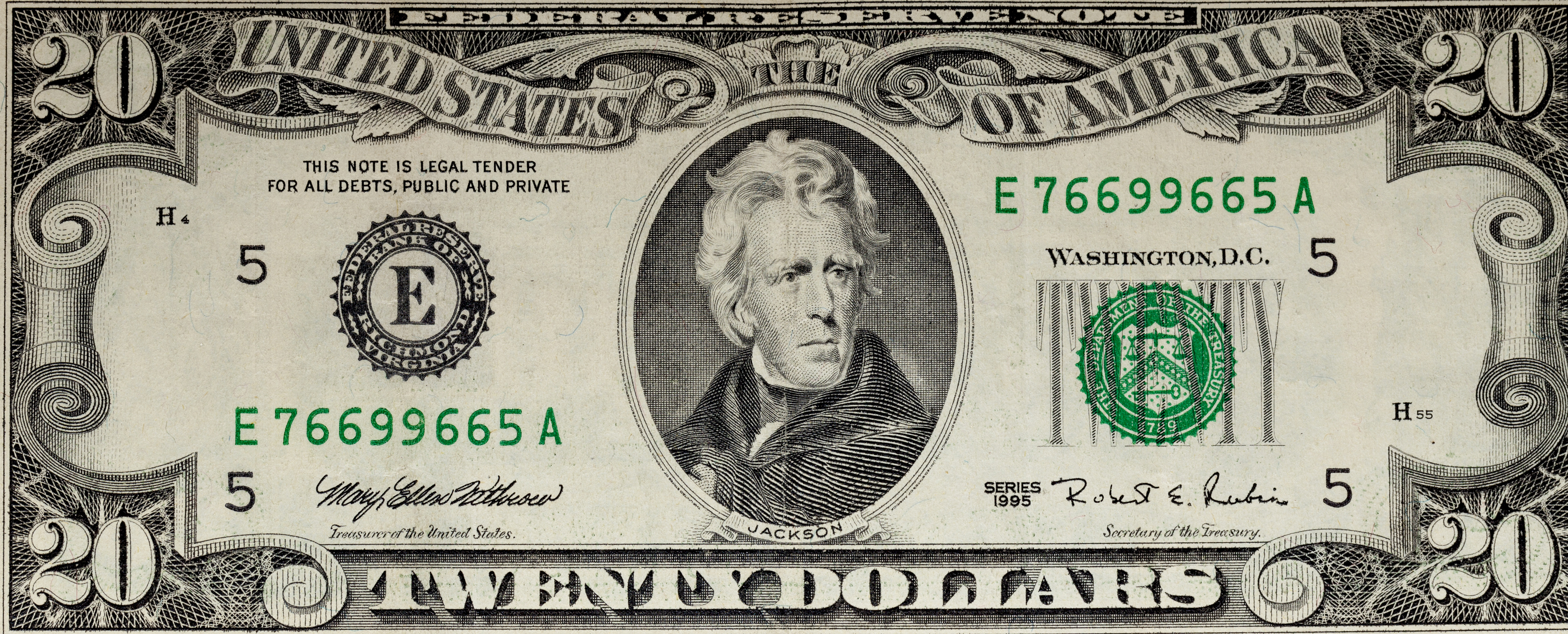
It seems like poetic justice—or perhaps cruel irony—that the very elites who once tried to kill Andrew Jackson’s legacy would later stamp his face on the $20 bill. The Second Bank’s charter expired in 1836, 20 years after its creation. Is it a coincidence that the man who dismantled the central bank now circulates endlessly through a monetary regime built on everything he fought to destroy? And yet, almost no one notices. Practically no one remembers. What appears to be a tribute is, beneath the surface, a quiet mockery. As if a rebel had been immortalized in the temple he once tried to burn down.
Together, these presidents—on and off Mount Rushmore—embody America’s enduring tension between liberty and control, as well as the balance between sovereign money and centralized financial power. It’s a battle that continues to shape the nation’s destiny. Abraham Lincoln, during the Civil War, issued debt-free greenbacks—government-backed currency that bypassed private bankers entirely. In the 20th century,
John F. Kennedy (1961–1963) issued Executive Order 11110, authorizing the U.S. Treasury to issue silver certificates, directly challenging the Federal Reserve’s monopoly on currency issuance. It was a bold and calculated move—one that has fueled decades of speculation that Kennedy paid the ultimate price for opposing the banking elite. Just months after signing the order, he was assassinated. Many believe his challenge to the central banking system cost him his life.
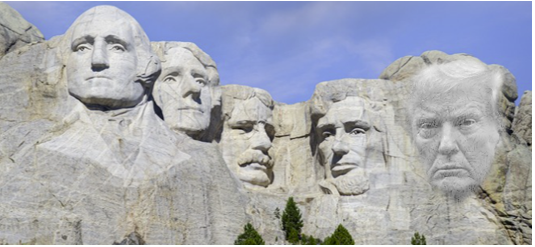
Donald J. Trump (2016 and 2024) has been proposed by supporters and commentators alike as a future addition to Mount Rushmore—an idea that, while controversial, reflects the profound impact of his leadership during a time of great transition. Trump is seen as a significant threat to the establishment, a disruptor who challenged entrenched power structures in government and finance. Throughout his first term, he openly criticized the Federal Reserve, questioning its decisions and independence, and casting it as part of a system that served global elites over the American people. Under his leadership, many believe the nation is entering a new era of financial sovereignty, marked by renewed strength, accountability, and reform.
Scripture reminds us that God appoints leaders for times and seasons. He raises kings, and He brings them down (Daniel 2:21). Trump is not a mouthpiece for God, nor does he represent divine perfection. But like many leaders throughout history, he has been granted authority for a purpose—allowed to rise in a time when the veil of deception must be torn. Through his presence, the spotlight shines brighter on corruption, and many have begun to see what they were once blind to.
To those who study the secrets of history—philosophers, mystics, and curious minds—this moment feels like a reawakening of something ancient. Whispers from the past speak of a “New Atlantis,” not just a political shift, but a spiritual vision for a new world rising.
This idea isn’t new. It traces back to secret societies like the Freemasons, who believed in building a society guided by hidden knowledge, sacred geometry, and ancient symbolism. Many of America’s Founding Fathers were Masons, and their influence is carved into the very design of Washington, D.C. The layout of the city features deliberate alignments, obelisks, and pentagrams, forming a symbolic blueprint that reflects power, enlightenment, and spiritual order. The Bible says that the love of money is the root of all kinds of evil and the founding fathers most who were diests believed in the sovergnty of man a theme inscribed in the constitution.
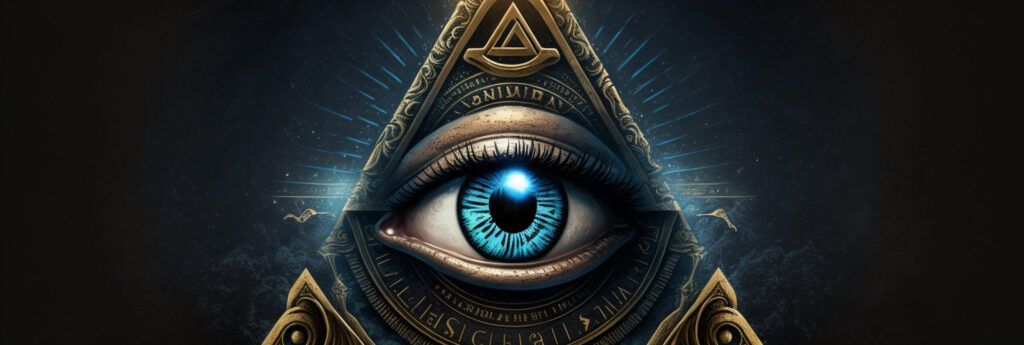
At the heart of this mystery lies the pyramid and the All-Seeing Eye, printed on the back of the U.S. dollar bill—imagery rooted not in Christianity, but in ancient Egyptian mystery schools. The unfinished pyramid represents a work still in progress, while the Eye above it—often called the Eye of Providence—is a symbol long embraced by Freemasonry as a mark of higher awareness, hidden control, and illumination from above.
Beneath the pyramid is the Latin phrase Novus Ordo Seclorum—“New Order of the Ages”—a cryptic declaration that America was always meant to be more than a nation. It was designed as a spiritual experiment, a platform for launching a new world system, carefully guided by those who understood the ancient codes.
And above this architecture of control, another symbol hovers in myth—the Phoenix, a legendary bird that dies in fire and rises from its own ashes. While most see the bald eagle as America’s national bird, early sketches of the Great Seal reportedly featured a Phoenix, not an eagle. To the initiated, the Phoenix represents rebirth through destruction, order through chaos—a foundational theme in both Masonic ritual and globalist design. It’s not just a bird; it’s a blueprint: burn down the old, then rise again—reborn, restructured, and ruled from above.
Today, as global governance reshapes the world, these ancient symbols no longer sit idle. The pyramid is still unfinished. The eye still watches. And the fire of the Phoenix, once a myth, now signals a new age. The question remains: will we recognize it for what it is, or will we mistake its glow for light?
The entire world is witnessing God’s unveiling of the evil. This is purposeful. This is not to exalt a man but to awaken people and expose the systems of darkness that have long operated in the shadows. To pull back the curtain on corruption. To confront the idols of comfort, control, and counterfeit peace. God’s Kingdom will come to Earth after the Great Tribulation, during His Millennial reign of 1,000 years. This is not a synthetic dream of utopian architects or the sterile control of global technocrats. This is something more profound—something forged in the fire of revelation.
Trump, like others before him, is not the entire answer, but in a time of unprecedented deception and global manipulation, God appointed a tenacious leader with an impossible mandate. A leader unafraid of the mob, immune to political correctness, and equipped with the media savvy to disrupt the narrative while he’s influencing the global economy. Trump is a brilliant tool in God’s hand for this hour, not because of personal holiness, but because of divine sovereignty.
Through the shaking, eyes are opening. Hearts are being tested. The illusions of peace and progress are beginning to crack. The world is watching—but heaven is calling.
And the question remains: will we see beyond the noise? Will we discern the times with spiritual eyes? Will we rise above the partisan frenzy and recognize the deeper unveiling at work? Will we answer the call—back to truth, back to righteousness, back to God?
Donald Trump is not a prophet, nor a savior; he is a disruptor strategically commissioned to confront the proud, unsettle the comfortable, and expose the systems that have long been hidden in plain sight. He has been allowed to shake the foundations, agitate the narrative, and rattle the cages of deception that lulled a generation into spiritual slumber.
Through the shaking, eyes are opening. Hearts are being tested. The illusions of peace and progress are beginning to crack. The world is watching—but heaven is calling.
And the question remains: will we see beyond the noise? Will we discern the times with spiritual eyes? Will we rise above the partisan frenzy and recognize the deeper unveiling at work? Will we answer the call—back to truth, back to righteousness, back to God?
The Bitcoin Experiment and Hidden Realities
Fast forward to the aftermath of the 2008 financial crash—a moment that reignited the battle over centralized economic control. The collapse wasn’t merely a market correction; it was a generational wound that exposed the fragility and corruption inherent in the global banking system. Trust in traditional institutions disintegrated almost overnight. Millions lost homes, jobs, and savings—while the very architects of the disaster were bailed out, shielded from consequence. For many, it was a brutal awakening: the system wasn’t built for them, but for the elite few who controlled the levers.
Out of this disillusionment, a new wave of innovation quietly began. In 2009, Bitcoin emerged—not as a loud rebellion, but as a curious and radical experiment in decentralized finance. Yet its timing, narrative, and open-source nature stirred something deeper. It provoked defiance. It gave voice to the frustrations of a generation that the system had betrayed. And in doing so, it planted the seeds of today’s decentralized revolution, fueled by a hunger for transparency and autonomy. Visionaries reimagined the financial future of how things could be.
Behind the scenes, a carefully crafted narrative took shape through Bitcoin’s 2,700-word White Paper, introducing a shadowy figure known only as Satoshi Nakamoto. The document promised a decentralized, peer-to-peer electronic cash system that would enable secure transactions without the need for intermediaries. Like a white horse charging onto the battlefield, it came to be seen by many who embraced it as the answer to the chaos unleashed by the 2008 financial crisis—a beacon of hope that such a collapse could be averted. Adoption grew steadily, driven by zeal and passion among crypto enthusiasts. But behind the scenes, the true architects understood the stakes, carefully crafting and controlling the narrative to align with a larger, calculated strategy.
Rising from obscurity, its alleged architect, Satoshi Nakamoto, promised to break the grip of entrenched financial powers, offering a vision of transparency and innovation to a world desperate for change. The timing and precision of this narrative suggested more than coincidence—it hinted at a deliberate countermove, engineered to challenge the very abuses of the traditional financial system. (Tradfi) Launched in 2009, Bitcoin quietly gained traction at a grassroots level. I remember it well. Its appeal was eclectic and unexpected—a coalition of anarchists, cryptographers, miners, and tech geeks came together. Among them were Ron Paul–inspired gold and silver purists, all dreaming of a decentralized refuge beyond the reach of governments and banks. These unlikely alliances fueled steady growth that defied skeptics and soon captured the world’s attention.
Yet, to truly ignite the revolution, Bitcoin needed mass adoption, but faced intense scrutiny. Mainstream media talking points accused Bitcoin of facilitating money laundering and other illicit activities. The media’s diversionary tactics effectively protected the status quo, shielding the legacy system from scrutiny. Bitcoin’s narrative became a blend of truth and deception, carefully crafted to galvanize its value and cement its role as the forerunner to a new golden age of finance. Strategic communication and carefully crafted narratives served as predictive programming, preparing the public for the coming future of decentralized finance (DeFi).
Then came the tipping point—ignited by a speculative frenzy—as early adopters, miners, and investors suddenly emerged as the new elite: parvenus, multimillionaires, and crypto-born billionaires—the freshly crowned 1%. The experiment captured the imaginations of those in the know, becoming the emblematic symbol that positioned Bitcoin as the future of money. But beneath the hype, critical weaknesses persisted—limited scalability and practical hurdles that prevented Bitcoin from fully delivering on its promises. The digital insurgency had begun, but the battle for the future of finance was far from over.
While Bitcoin initially set out to become a global payment system, its outdated technology has struggled to scale effectively. As a result, Bitcoin has been widely adopted as a “store of value,” often likened to digital gold—a haven for wealth preservation rather than a functional currency for everyday transactions. This lauded role elevates Bitcoin in the eyes of many investors and enthusiasts, granting it a status beyond its practical capabilities. Yet beneath this reverence lies a fundamental truth: Bitcoin never fulfilled its original role as a seamless peer-to-peer electronic cash system. Its limitations in speed and scalability kept it from revolutionizing everyday payments. Jack Dorsey, Twitter and Square co-founder, warned in a 2025 interview that Bitcoin risks “irrelevance” if it remains just a store of value, criticizing solutions like the Lightning Network and stressing the need for scalable payment systems. The most notable real-world transaction remains the purchase of a pizza in 2010 for 10,000 bitcoins—a landmark moment, but hardly the widespread adoption once promised.
In this new light, Bitcoin serves more as a speculative asset and hedge than a practical tool for daily commerce. Efforts to overcome these limitations, such as the Lightning Network, developed in 2015, have yet to achieve widespread adoption or gain momentum. Due to slow transaction times and inefficiencies inherent in Bitcoin’s antiquated ledger, its payment system restricts global adoption. With more than 8 billion people on Earth, each would be limited to around three lifetime transactions. This inability to scale meant Bitcoin was not the solution it promised to be.
Fast-forward again to the aftermath of the 2008 financial crisis—a moment that reignited the battle over centralized economic control. The collapse wasn’t merely a market correction; it was a generational wound that exposed the fragility and corruption inherent in the global banking system. Trust in traditional institutions disintegrated almost overnight. Millions lost homes, jobs, and savings—while the very architects of the disaster were bailed out, shielded from consequence, as alluded to in the movie, The Big Short. Even brilliant minds like Michael Burry—who predicted the 2008 crash—can be blinded by the light of their own brilliance. Anchored to past success and traditional finance, they dismiss the rising digital economy as noise, failing to recognize the quiet restructuring that is happening in real time.
This isn’t just innovation—it’s a global reset. A new financial architecture is being laid while the old system erodes beneath the surface. Those who ignore it—out of pride, doubt, or comfort—risk being left behind. For many, it was a brutal awakening: the system wasn’t built for them, but for the elite few who controlled the levers.
Out of the wreckage of the 2008 real estate collapse, a quiet spark of innovation was lit. As mentioned, in 2009, Bitcoin emerged—not as a roaring revolution, but as a bold and intriguing experiment in decentralized finance. Its arrival was subtle, yet its implications were seismic. It struck a chord, tapping into the disillusionment of a generation that the old system had betrayed. More than just code, it became a symbol of defiance, a whisper of a new way forward. And in that moment, the seeds were sown for a financial awakening—one driven by the pursuit of transparency, personal sovereignty, and the possibility of a reimagined economic future.
However, in the end—and to be honest—Bitcoin ultimately failed to fulfill its original vision. It never became the peer-to-peer electronic cash system it claimed to be. And maybe that’s the point. It was never meant to be the final product, but rather a glorified beta test—proof that a new financial paradigm could exist.
Despite its compromises, challenges, and limitations, I often wonder how the future narrative will be shaped—and whether Bitcoin will ultimately be preserved as an American national treasure, a symbolic relic in the evolution of money. Especially now, in light of real-world utility and the rise of decentralized finance (DeFi) platforms with tangible use cases, one must ask: Will Bitcoin remain a digital monument to early innovation, or will it be outpaced by more agile, functional technologies built for today’s financial realities?
Ryan Fugger’s RipplePay: A Decentralized Challenge
Even before Bitcoin’s rise, a separate vision for digital finance was already taking root, led by another Fugger. In 2004, at just 27 years old, Canadian engineer Ryan Fugger launched the “Ripple Project” and founded RipplePay, introducing a decentralized alternative to traditional payment systems. His model, built on trust lines for peer-to-peer transactions free from bank control, directly challenged the legacy financial order.
Whether Ryan is related to Jakob Fugger—the legendary Renaissance banker—remains unclear, but the connection sparks curiosity. Especially when considering Ripple’s current CTO, David Schwartz, a brilliant cryptologist and co-creator of the XRP Ledger. With deep expertise in cryptography, distributed systems, and software engineering—sharpened during his work with the NSA and early blockchain patents—Schwartz has become a driving force behind Ripple’s cutting-edge financial infrastructure.
These videos from Ripple’s website go into the history and explain Ripple and XRP.


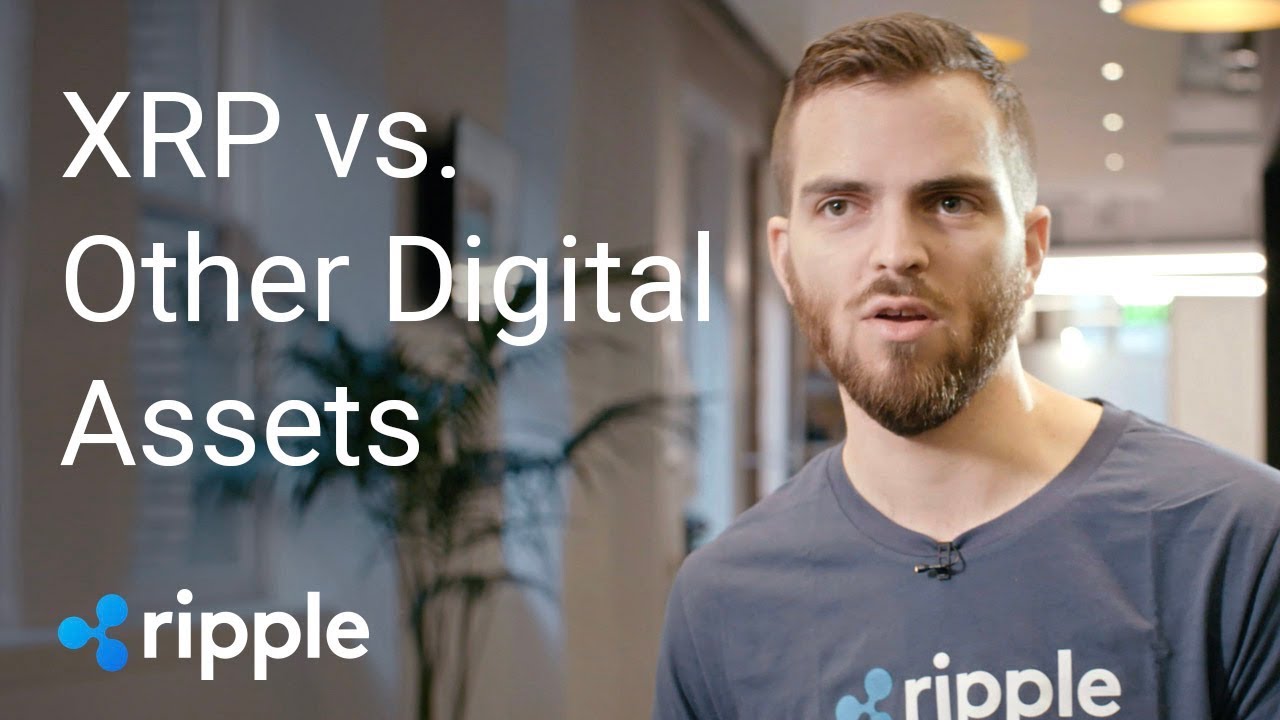
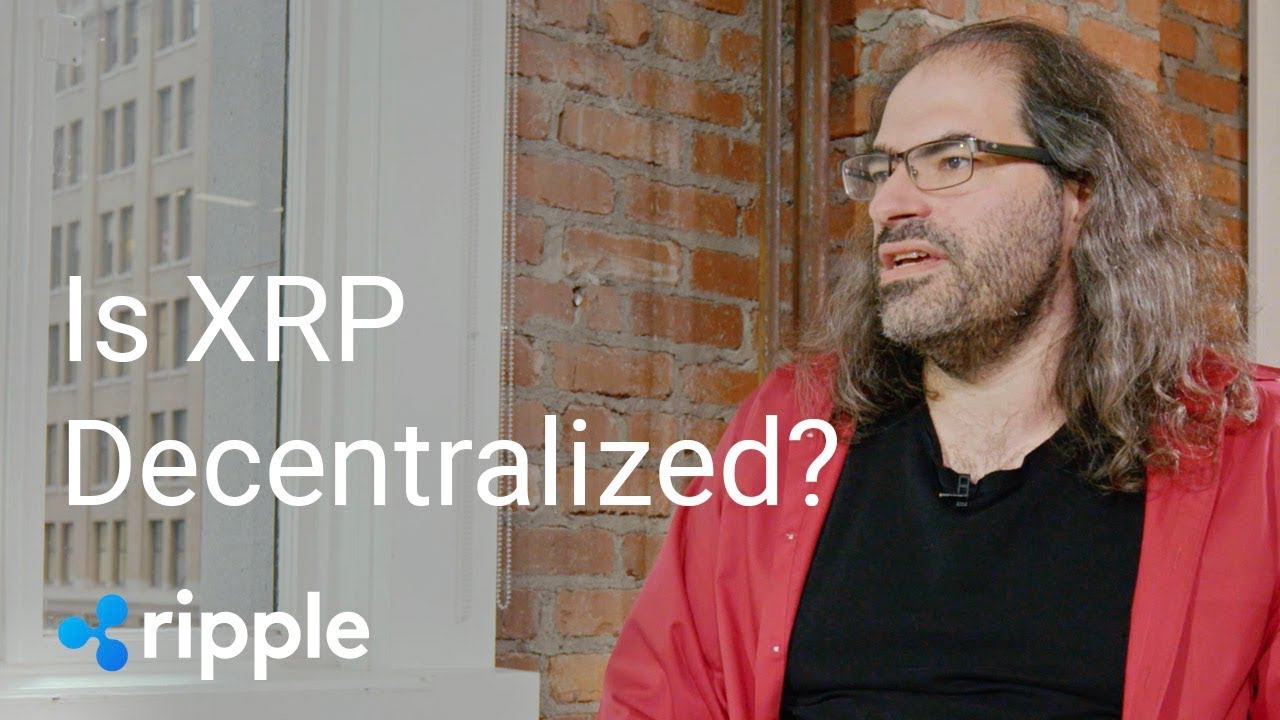
Curiously, Ryan Fugger originally named his project RipplePay. By 2011, as Bitcoin gained traction, a new team—David Schwartz, Jed McCaleb, and Arthur Britto—began developing a next-generation financial infrastructure inspired by Bitcoin but engineered for greater speed and energy efficiency: the XRP Ledger. During this time, McCaleb initiated discussions with the young visionary Fugger to explore integrating RipplePay’s foundational concepts into their emerging system. These talks led to a pivotal collaboration, with elements of RipplePay’s technology forming part of the framework that gave rise to OpenCoin in 2012.
OpenCoin, co-founded by Schwartz, Britto, and Chris Larsen, became the original entity behind the XRP Ledger. In 2013, the company rebranded as Ripple Labs, aligning more closely with its vision of transforming global payments through the Ripple protocol. By 2015, it simplified its name to Ripple. This sequence of events reveals more than a corporate evolution—it hints at a foundational collaboration between Fugger and Schwartz during a defining moment in financial history
Why has XRP ledger developer, Arthur Britto, remained an elusive figure, never publicly interviewed or seen beyond a rumored encounter with a three-letter agency in 2018? Curiously, Britto broke his 14‑year silence on June 23, 2025, posting a single “no‑mouth face” emoji (😶) on his @ahbritto X account. Interesting. What kind of influence might this mysterious creator have had in shaping the direction of the XRP Ledger behind the scenes? Were Britto and Schwartz the developers of the Satoshi myth? Speculative or not, the timing is uncanny.
By the time Bitcoin appeared in 2009, both men were already thinking in terms of decentralized consensus and digital asset protocols. Decentralized consensus enables blockchain networks to validate transactions without a central authority, instead relying on multiple nodes to validate transactions. Decentralized consensus enables blockchain networks to validate transactions without a central authority, relying instead on nodes (mainframe servers) connected to the network that store and verify data. They work together to reach a consensus on the truth.
Digital asset protocols define the rules for creating, transferring, and managing digital assets, such as cryptocurrencies, securely across these decentralized systems. Some believe Britto’s silence is strategic—perhaps to protect Ripple’s deeper connections to government or intelligence channels. Some wonder if the name “Satoshi” was just a clever distraction—and that Britto, along with Schwartz and possibly Jed McCaleb, were part of a larger group whose ideas helped launch not only Ripple but also the entire concept of decentralized digital money. Whether myth or mechanism, Britto’s absence speaks volumes—fueling speculation that behind the curtain, he was not just a builder of ledgers, but a craftsman of financial narrative itself.
The Bitcoin BETA Test – Bitcoin 2.0 = XRP
Bitcoin had big problems to overcome. XRP ledger developer and current Ripple CTO David Schwartz acknowledged over the years that Bitcoin was essentially a beta test—an early experiment in cryptocurrency designed as proof of concept for decentralized digital money. A statement from David Schwartz surfaced in 2011. He said, “I’ve been working on a Bitcoin successor myself after seeing what has worked well and what has not worked well.” Chris Larsen, Ripple’s co-founder, noted in a 2019 Forbes interview that Bitcoin had moved from a payment system to “digital gold” and that the narrative had shifted. Jed McCaleb criticized Bitcoin’s mining inefficiencies in a 2011 forum post, which influenced the design of XRP to overcome scalability and speed limits.
Notably, well before Bitcoin’s creation, David Schwartz filed a patent (US5025369A), titled “Computer System,” on August 25, 1988, granted in 1991 under David Schwartz Enterprises, Inc. The patent outlines a multilevel, distributed computer system for decentralized processing, utilizing personal computers. In essence, it describes a network of independently operating nodes—computers that collaborate to execute and validate tasks across a shared system—a concept strikingly similar to how modern blockchains and distributed ledgers function today.
Like today’s blockchain systems, Schwartz’s design imagined a decentralized network with no single point of failure. Each computer—or “node”—could perform its processing and work together to reach a consensus across the system. The patent focused on efficiency, backup systems, and communication between these distributed computers—core ideas that now power Bitcoin, Ethereum, and, in particular, the XRP Ledger. In Bitcoin’s case, trust comes not from a central authority, but from the protocol and the combined work of many computers working together.
Was this merely ahead of its time, or was it foundational? Given Schwartz’s background in cryptography and his later partnership with Arthur Britto and Jed McCaleb to build Ripple Labs, it’s hard to dismiss the pattern. Was the alignment between Jakob Fugger’s trust-based ledger, Ryan Fugger’s RipplePay, and Schwartz’s distributed architecture just a coincidence? Or was it the convergence of a vision long in motion, where the architecture of trust, decentralization, and programmable value quietly evolved?
Whether Schwartz and the other founders merged their ideas with Fugger’s by coincidence or through a deliberate partnership remains unclear. What is certain, however, is that their combined efforts led to the creation of the XRP Ledger and the founding of Ripple Labs. David Schwartz, a seasoned software engineer, brought deep technical expertise to the evolution of Fugger’s RipplePay concept. Adding to the intrigue, Schwartz also consulted on cryptography projects for the National Security Agency (NSA) in the 2000s, though the details remain classified. His work likely involved advanced encryption, secure communications, and distributed systems—core skills essential to building a safe, secure, scalable blockchain ledger.
The Transition from RipplePay to Ripple Labs: Vision Lost or Legacy Continued?
Notably, no public record exists of any financial exchange between Ryan Fugger, the original visionary behind RipplePay, and the eventual founders of XRP and Ripple Labs. Whether Fugger relinquished his work freely or through undisclosed arrangements remains unclear. The details are carefully obscured behind layers of legal and corporate structuring. Yet what is evident is this: building upon Fugger’s foundational ideas enabled a strategic and disruptive evolution. It was a response to the inefficiencies, manipulation, and exploitative nature of centralized banking systems. In many ways, it shed new light not only on the promise of decentralized finance (banking without intermediaries using blockchain) but also on the unresolved limitations of Bitcoin itself. Fugger’s quiet departure may mark the end of his role. Still, the legacy of his original vision lives on, amplified and expanded into something far more global than he could have possibly imagined.
Bitcoin captured imaginations with its vision of decentralized money. Still, as mentioned, it soon confronted critical hurdles: limited scalability, slow transaction speeds, and a growing reliance on speculative narratives rather than practical application. In contrast, Ripple’s growth over the past 13 years has been driven by measured strategy and key partnerships, methodically constructing a global financial network poised to reshape the future of money.
Post Fugger: The Founding of Ripple Labs and XRP’s Journey
In 2012, the creators of the XRP Ledger—Jed McCaleb, Arthur Britto, and David Schwartz—reserved 80 billion XRP for their company, OpenCoin, while keeping 20 billion for themselves. This supply was designed to fuel long-term growth and operations. In 2017, Ripple placed 55 billion XRP into escrow to boost transparency and maintain a predictable supply. Each month, 1 billion XRP is released, with unused tokens returned, helping to ensure price stability and network liquidity. Large financial institutions can purchase XRP at the spot price through private sales, which do not affect the public cost of XRP on exchanges.
When the SEC filed a $1.3 billion lawsuit in December 2020, accusing Ripple of selling unregistered securities, Ripple, well-funded and legally prepared, stood its ground. The company ultimately won, marking a major victory against the SEC’s controversial tactic of regulation by enforcement and setting a precedent for crypto clarity in the U.S.
Rewind to April 2013. OpenCoin, the company behind the XRP Ledger, has gained attention from prominent venture capital firms, including Andreessen Horowitz and Lightspeed Venture Partners. These investments enabled the company to grow and enhance its technology. That same year, OpenCoin acquired SimpleHoney, a startup focused on simplifying online shopping. The goal was to create a smoother user experience for XRP-based payments. By September 2013, OpenCoin rebranded as Ripple Labs to reflect its focus on building payment solutions. Two years later, in 2015, the company shortened its name to just Ripple.
In 2015, tech executive Brad Garlinghouse—known for roles at Yahoo!, AOL, and Hightail—joined Ripple as COO and became CEO in 2016. Co-founder Chris Larsen brought him in to sharpen the company’s direction. Garlinghouse applied his “Peanut Butter Manifesto” philosophy: stop spreading resources too thin and focus on what matters. That focus became solving problems in cross-border payments. He introduced the “Internet of Value” vision—where money moves as fast as data, powered by XRP. In a 2020 interview with The Financial Times, Garlinghouse said Ripple aimed to become “the Amazon of payments.” Under his leadership, RippleNet expanded to over 300 financial partners by 2025 and launched key products between 2016 and 2018 that utilize XRP and blockchain technology to facilitate instant and efficient money movement.
Some speculate that the 2020 SEC lawsuit against Ripple was more than just regulatory overreach—it may have been a calculated move to delay what was already in motion. Whether it was a strategic stall or the result of internal conflict within the U.S. financial system, the case exposed a deeper power struggle: two competing forces fighting for control. On one side was the traditional banking system, built on centralized authority and legacy infrastructure. On the other side was the rise of decentralized finance (DeFi)—a faster, borderless, and more open financial model that challenges traditional financial approaches. Ripple found itself caught in the middle, bridging both systems. It became the center of a larger clash between the past and the future of global finance.
To modernize global payments, Ripple developed a suite of products—xCurrent, xRapid, and xVia—each targeting specific inefficiencies in cross-border transactions. Together, they laid the groundwork for RippleNet, enabling faster, cheaper, and more efficient payments for banks, businesses, and financial institutions worldwide. Here are the products that Ripple has rolled out for banks.
2014 – xCurrent: A messaging and settlement platform that allows banks and financial institutions to communicate and complete transactions quickly and reliably.
2017 – xVia: An API-based interface that enables businesses to easily send payments through Ripple’s network without needing to develop complex software themselves.
2018 – xRapid: A liquidity tool that uses XRP to move money faster and reduce the costs of transferring funds across borders.
By 2019, Ripple had combined its core products into RippleNet—a network designed to facilitate faster, cheaper, and more efficient global money transfers. xRapid was renamed On-Demand Liquidity (ODL) because it enables banks to access liquidity in real time for cross-border payments. ODL utilizes XRP, the digital asset of the XRP Ledger—a Layer 1 blockchain, meaning it is the foundational network where transactions are recorded, validated, and settled directly without relying on another blockchain.
Traditionally, banks have used nostro/vostro accounts—pre-funded foreign currency accounts held in partner banks—to ensure cash is available in the destination country. This outdated model ties up billions in idle capital and slows down transactions. With ODL, banks can convert local currency into XRP, send it instantly through RippleNet, and convert it into the destination currency—all without pre-funding accounts.
Think of XRP as an underground oil field powering the entire payment system, or like a toll booth that lets money flow smoothly without traffic jams. This “Layer 1 liquidity” creates a frictionless, real-time payment experience, eliminating delays and keeping global money movement fast, fluid, and reliable.
ODL also integrates with Automated Market Makers (AMMs)—decentralized liquidity pools that automatically facilitate the buying and selling of XRP across various currency pairs. These AMMs help ensure that XRP can be quickly exchanged for local currencies at fair market rates, even during high-volume transfers. By improving liquidity and minimizing price volatility during transactions, AMMs support the smooth functioning of ODL. This innovation enhances Ripple’s scalability and global reach, enabling banks and businesses to move money quickly, reliably, and at lower cost.
Massive Adoption is Underway
Behind the scenes, some of the world’s largest financial institutions are already tapping into the power of Ripple and XRP. Bank of America is reportedly using XRP internally, while Banco Santander México moves over €450 million through its One Pay FX platform. HSBC is actively piloting On-Demand Liquidity (ODL), and SBI Holdings has integrated 80% of Japan’s banking sector into the XRP ecosystem. The network is expanding rapidly, with heavyweights like Standard Chartered, PNC, UBS, Itaú Unibanco, NBAD, Tranglo, RBC, MUFG, Westpac, BBVA, American Express, SBC, and Mellon Bank all linked in. These aren’t fringe players—they’re global gatekeepers, quietly aligning with Ripple’s infrastructure as the digital rails of the future are laid in real time.
Transactions on RippleNet settle in just seconds and cost only a fraction of a penny, making fast, affordable payments possible at a global scale. Ripple has formed key partnerships to strengthen its position in the evolving digital economy. One example is Metaco Custody, which provides secure digital asset storage for banks such as BBVA, enabling institutions to manage their crypto holdings safely. Ripple is also working with firms like Hidden Road to explore tokenized derivatives—financial products that represent traditional assets on the blockchain. Additionally, RippleNet integrates with R3’s Corda, a platform used by banks and corporations for trade finance, allowing for secure and efficient transaction settlement. These strategic moves position XRP as a core asset in both digital payments and the future of global financial markets.
RippleNet has fully adopted the interoperable ISO 20022 messaging standard—a protocol introduced in 2004 that sets the global benchmark for detailed, seamless communication. The old ISO standard (SWIFT MT) limited messages to about 100 characters, whereas ISO 20022 allows up to 9,000 characters. This expanded capacity enables banks to share far more detailed information, significantly enhancing interoperability. As a result, global financial systems are now more interconnected, which reduces errors and speeds up transactions.
The transition to ISO 20022 is reaching a critical milestone, with the July 14th, 2025 deadline marking the complete migration of many key financial institutions to the new standard. This shift is not isolated—utility tokens such as Quant, Stellar, XDC, Algorand, Cardano, Hedera, and IOTA have also adopted ISO 20022, enabling swift interoperability and integration with RippleNet, as well as central bank digital currencies or stablecoins. RippleNet operates within a complex web of alliances where institutions such as the Bank for International Settlements and the International Monetary Fund serve the interests of their stakeholders, while RippleNet advances its mission to unify global payments.
RippleNet’s reach has expanded as central banks from Thailand, Saudi Arabia, and Bhutan have joined the network. However, the exact number isn’t certain. By 2024, CEO Brad Garlinghouse confirmed that Ripple has active projects with 10 governments, underscoring the company’s growing influence. The IMF’s 2023 report, Trust Bridges and Money Flows, recognized Ripple as a promising path toward unifying global payments. At the 2019 SWELL Singapore event, Garlinghouse stood alongside IMF leaders, highlighting Ripple’s central role in shaping the future of international finance.
Ripple’s influence extends steadily across global finance—measured, deliberate, and undeniable. It weaves into established networks, challenging entrenched power structures and demanding attention from the traditional players. This is not merely an expansion; it is a strategic shift that signals a transformation in how value is distributed worldwide. As Ripple’s network grows and alliances deepen, it raises pressing questions about the future of money and who will ultimately control its flow.
The Rise of the Phoenix and the Future of Money
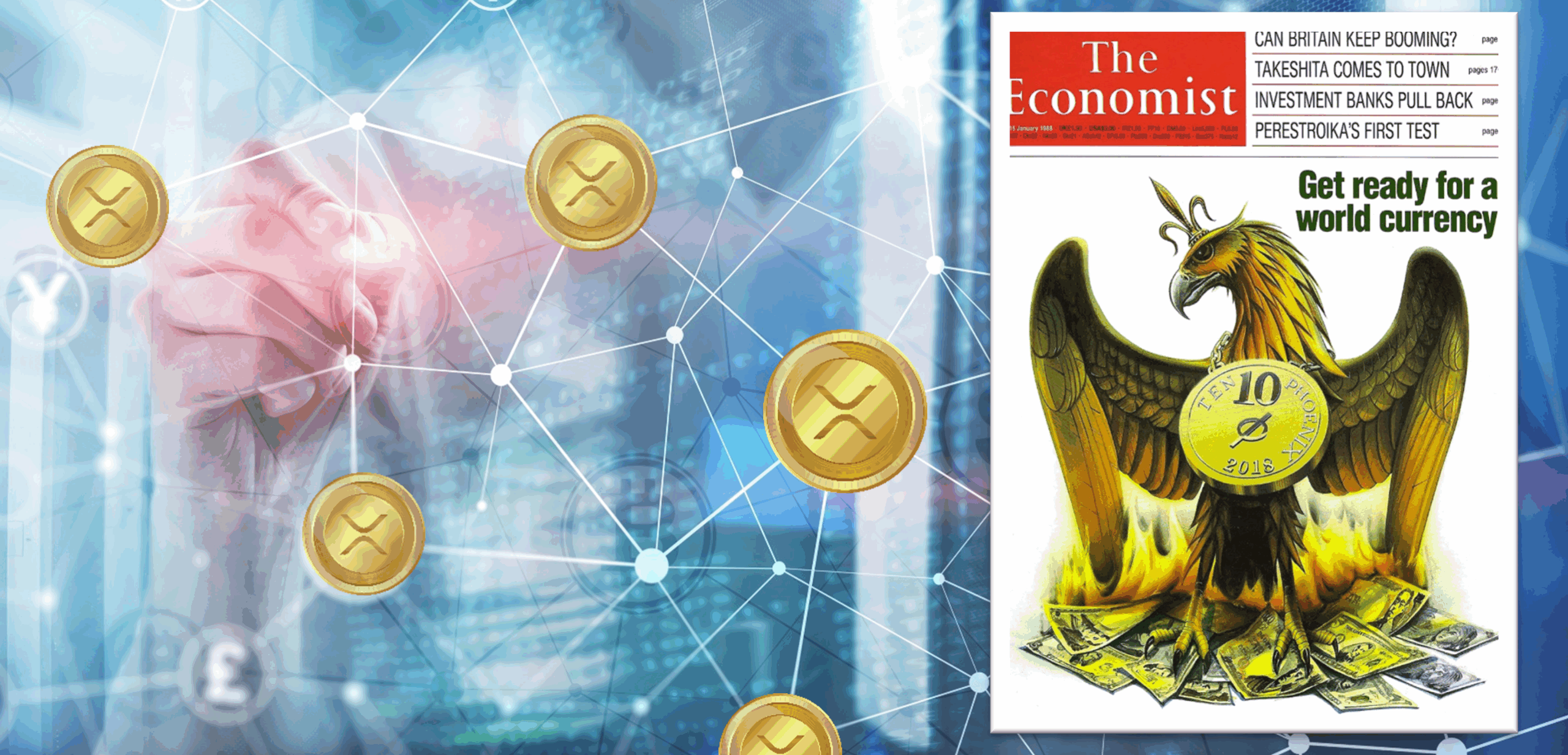
As the “flip the switch” moment looms—evoked by The Economist’s iconic 1988 article featuring a phoenix rising from the ashes of burning fiat currencies, titled “Get Ready for the Phoenix”—Ripple’s founders and partners have been steadily developing a foundational global payment network—a “layer one” infrastructure designed to support the entire monetary system. Through the XRP Ledger and RippleNet, the company aims to facilitate fast, secure, and cost-effective cross-border transactions, enabling banks, financial institutions, and even central banks to connect seamlessly on a decentralized platform that could underpin the future of global finance.
We stand at the crossroads of the Fourth Industrial Revolution, a seismic shift where digital code eclipses the power once wielded by steam engines, steel mills, and silicon chips. In the age of Atlas Shrugged, during the height of the Second Industrial Revolution, value moved along steel rails—tangible, heavy, and bound to geography. Titans of that era forged empires with locomotives, molten metal, and raw industrial force. But today, those steel tracks have been replaced by digital rails—blockchain protocols and decentralized networks that move value at the speed of light. This new frontier is called the Internet of Value—a vast, borderless landscape where assets are no longer confined by physical location but flow frictionlessly through code, redefining the very foundations of wealth, trust, and global commerce.
Enter the “Finternet,” a term coined in 2024 by Agustín Carstens, the GM of the Bank for International Settlements, alongside Nandan Nilekani, co-founder of Infosys. This isn’t just jargon; it’s the blueprint for a meticulously engineered financial web. Here, central banks — the Banque de France, the Bank of Japan, the Federal Reserve Bank of New York — stand shoulder to shoulder with private sector titans, their alliance brokered through the Institute of International Finance.
Together, they’re weaving an intricate lattice of tokenized assets and unified ledgers. They are crafting a new architecture designed to redefine and dominate the global finance landscape. This multi-verse network operates with relentless precision, executing transactions in milliseconds, tearing down old barriers, and ushering in an era where money flows seamlessly and invisibly, underpinned by code as secure as any nation-state.
In the shadows of institutional collaboration and carefully crafted transparency, a single question lurks like a whispered code: Who is Satoshi Nakamoto—the ghost in the machine behind Bitcoin? Why would the world’s financial powers entrust their fate to an anonymous phantom cloaked in layers of digital smoke and mirrors? The answer is cold and clear: Bitcoin’s technology was never engineered to handle the colossal scale of a global, multi-trillion-dollar financial battlefield. It was a prototype—a decoy in a game far bigger than most realize.
A Tale of Legacies: Control vs. Transparency
No direct link has been proven, yet the Rothschild banking dynasty’s 26 percent stake in The Economist raises a curious question. Sir Evelyn de Rothschild chaired the publication from 1972 to 1989. Then there’s the Economist’s 1988 article, “Get Ready for the Phoenix”—an eerie forecast of a global currency that matches the Bank for International Settlements’ plans.
The legacies of Jakob Fugger and Ryan Fugger represent two divergent paths in the evolution of finance and power. Jakob Fugger, the dominant financier of the late 15th and early 16th centuries, amassed a vast empire by ensnaring kings and kingdoms in a web of debt, leveraging usury and centralized authority to extend his control. His legacy epitomizes the old order—an empire of secrecy, hierarchy, and manipulation, now faltering but still fiercely clinging to power.
Centuries later, Ryan Fugger introduced a radically different vision. Through RipplePay, he pioneered a decentralized, peer-to-peer payment system based on trust lines and consensus, rather than coercion. This new architecture offers a stark contrast: a future built not on domination, but on connection—one that promises freedom, fluidity, and global interoperability.
Beneath the polished surface lies a carefully designed system where comfort is controlled, and freedom is granted only when allowed by those in power. Jakob Fugger built his empire through control and secrecy, using debt to bind nations. In contrast, Ryan Fugger’s system was built on code, transparency, and decentralized trust, changing how value moves across digital networks.
Their shared name raises questions—is it just a coincidence, or do they represent two opposing visions battling for the future of finance and freedom? In the end, no matter how different the systems appear, each one carries the potential to enslave.
A decisive shift is underway. A robust network of utility-driven cryptocurrencies is now igniting what many call the Finternet—a decentralized, interoperable financial system connecting hundreds of institutions and central banks through a shared, tamper-proof ledger. Operating at near-instant speed and with unprecedented transparency, this network is tearing down the long-standing barriers of the legacy monetary system. Foreign exchange markets, derivatives, and settlement processes, once riddled with delays and fees, will be streamlined, and institutions like SWIFT—once the backbone of global payments—will become obsolete.
Beyond any single currency, an arsenal of tokenized financial instruments is emerging. Through blockchain and smart contracts, nearly every asset of value—real estate, commodities, intellectual property, and even personal data—can now be digitized, fractionalized, and traded globally in real-time. Ownership becomes instantly verifiable. Transactions become borderless and frictionless. Markets once bound by bureaucracy are being set free. What was once the dream of seamless global commerce is rapidly becoming our daily reality.
Over the next decade, this convergence of technologies will unleash the full power of the Web 3.0 Internet of Value, triggering a massive global reorganization of the traditional financial system. But it won’t just shift capital; it will redefine how wealth is created, exchanged, and preserved. As trust is transferred from people to protocols and power from sovereign nations to algorithmic consensus, we must ask: What is this preparing the world for?
The answer becomes clear: these systems are laying the groundwork for a global government. In this unified financial and technological order, control is centralized under the guise of efficiency and security. Scripture warns of such a time, when nations will yield sovereignty to a singular power, and the world will trade its soul for peace, safety, and digital convenience.
But for the believer, this is not a time to fear—it is a time to prepare. Scripture speaks of a shaking of kingdoms and a transfer of wealth (Haggai 2:7, Proverbs 13:22), a moment when the people of God must rise with wisdom and discernment. As the world aligns itself under a new global order, we are called to anchor ourselves in God’s eternal Kingdom—unshakable, incorruptible, and everlasting. What is coming upon the earth is not just economic transformation—it is a prophetic unveiling. The question is: will you be ready? Time is of the essence. If you’ve gotten this far, you should seriously consider setting up a Coinbase account.
See the timeline associated with this article from 1510 to the present.
The Spiritual Implications of What Is Unfolding
The transition from SWIFT to ISO20022
Please note that I’m not a licensed financial advisor, attorney, or investment professional. Everything I share is based on personal research, a love for history, and a passion for uncovering truth, not financial advice. I’m just a guy who enjoys connecting dots, digging through historical patterns, and asking questions most people aren’t asking. Always conduct thorough research and consult with a qualified expert before making any financial decisions.
These are YouTube channels I have been following for years. There are many low-quality channels, but these are credible, featuring people who conduct thorough research. I recommend subscribing to the channels because they post new content every day. All of these people have been invested for years.