
- You are here:
- Home »
- Franchising »
- The Power of the Turn-Key: How Franchises Turn Vision Into Reality
The Power of the Turn-Key: How Franchises Turn Vision Into Reality
Why Ray Kroc’s McDonald’s Model Still Shapes Business Success Today
In the world of entrepreneurship, there’s a profound difference between having a good idea and building a thriving business. The road from vision to reality is often paved with complexity: choosing a location, branding, marketing, inventory, systems, hiring, training—it’s no wonder nearly 80% of small businesses don’t survive past their fifth year. But what if there was a road already paved, a vehicle already built, ready for you to turn the key and drive?
That’s the beauty of a franchise.
Franchising is more than a business; it’s a fully formed ecosystem—a turn-key business system designed for duplication and success. It provides a comprehensive infrastructure, including a proven product or service, a trusted brand, marketing resources, training programs, and streamlined operations. For those who dream of entrepreneurship but feel daunted by the start-up maze, a franchise can be the bridge between desire and achievement.
Few stories illustrate the power of a turn-key system better than that of McDonald’s and the man who saw its potential: Ray Kroc.
A System, Not Just a Burger
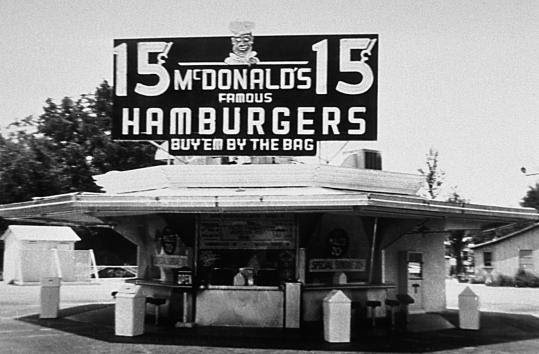
The McDonald brothers, Richard and Maurice, weren’t trying to create an empire in 1948. They were simply trying to make their San Bernardino, California restaurant more efficient. They closed the drive-in, laid off their carhops, slashed the menu to just nine items, and restructured the kitchen like an assembly line. What they invented was not merely a faster burger—it was a system. They called it the “Speedee Service System.” It was revolutionary: quick, consistent, affordable. But they didn’t know it was a scalable empire in waiting.
Enter Ray Kroc, a 52-year-old milkshake machine salesman who visited the restaurant in 1954 after noticing they were ordering an unusually high number of mixers. What he saw wasn’t just a successful diner. He saw a replicable system that could reshape how America—and eventually the world—ate. Kroc pitched the idea of franchising McDonald’s nationwide and became a licensee. On April 15, 1955, he opened the first McDonald’s franchise in Des Plaines, Illinois. The receipts from day one totaled $366.12—not earth-shattering, but proof of concept.
What followed wasn’t just growth—it was a transformation of the American business landscape.
The Engine of Duplication
Kroc’s genius wasn’t just in recognizing the value of a cheeseburger. It was in understanding the power of systems. He standardized every element of the restaurant—everything from the length of time the fries were cooked to the way a cashier greeted customers. And when he brought in financial strategist Harry Sonneborn, McDonald’s turned from a restaurant chain into a real estate empire. Franchisees leased their locations from McDonald’s, giving the company an additional, predictable revenue stream and unprecedented control over quality and brand integrity.
By 1961, Kroc had grown impatient with the McDonald brothers’ conservative pace. He bought them out for $2.7 million, assuming full control. Under his leadership, McDonald’s experienced explosive growth. It opened its 100th store in 1959, its 500th by 1963, and crossed 1,000 locations by the end of the decade. By the time of Kroc’s death in 1984, McDonald’s had become a global force, with 7,500 locations generating $8 billion in annual revenue.
It wasn’t because the food was the best in the world. It was because the system worked. It was scalable, consistent, and simple to operate.
That’s what a franchise is at its core: a repeatable system that empowers individuals to step into business ownership with support, structure, and guidance.
Fit Is Everything
But even the best turn-key car needs the right driver. A franchise system doesn’t run itself. Not every McDonald’s owner became a millionaire. Success depends not just on the system, but on the person operating it.
Franchising works best when the business aligns with the individual’s strengths, values, and interests. This alignment—what some refer to as your business’s “fit” or model—is crucial. You could buy into the most profitable system in the world, but if it doesn’t align with your personality, leadership style, or purpose, it becomes a burden instead of a blessing.
That’s why, before joining any franchise, the most important question isn’t “How much can I make?” It’s “Is this me?”
Because while the turn-key system is powerful, it’s the driver—committed, focused, and aligned with purpose—who determines how far the journey goes.
The Legacy Continues
Today, McDonald’s operates in over 118 countries with more than 38,000 restaurants—about 95% of which are franchised. Its story is still taught in business schools as the gold standard of operational scalability and brand power.
But at its heart, the McDonald’s story—and the franchise model in general—is a story about possibility. About how a simple system, well-executed, can empower everyday people to step into the extraordinary.
So if you’ve ever dreamed of starting your own business, consider this: Maybe the road to your future has already been paved. Maybe all it takes is finding the right vehicle—and turning the key.