
- You are here:
- Home »
- Leadership »
- Empty Vessels and the Quiet Work of God
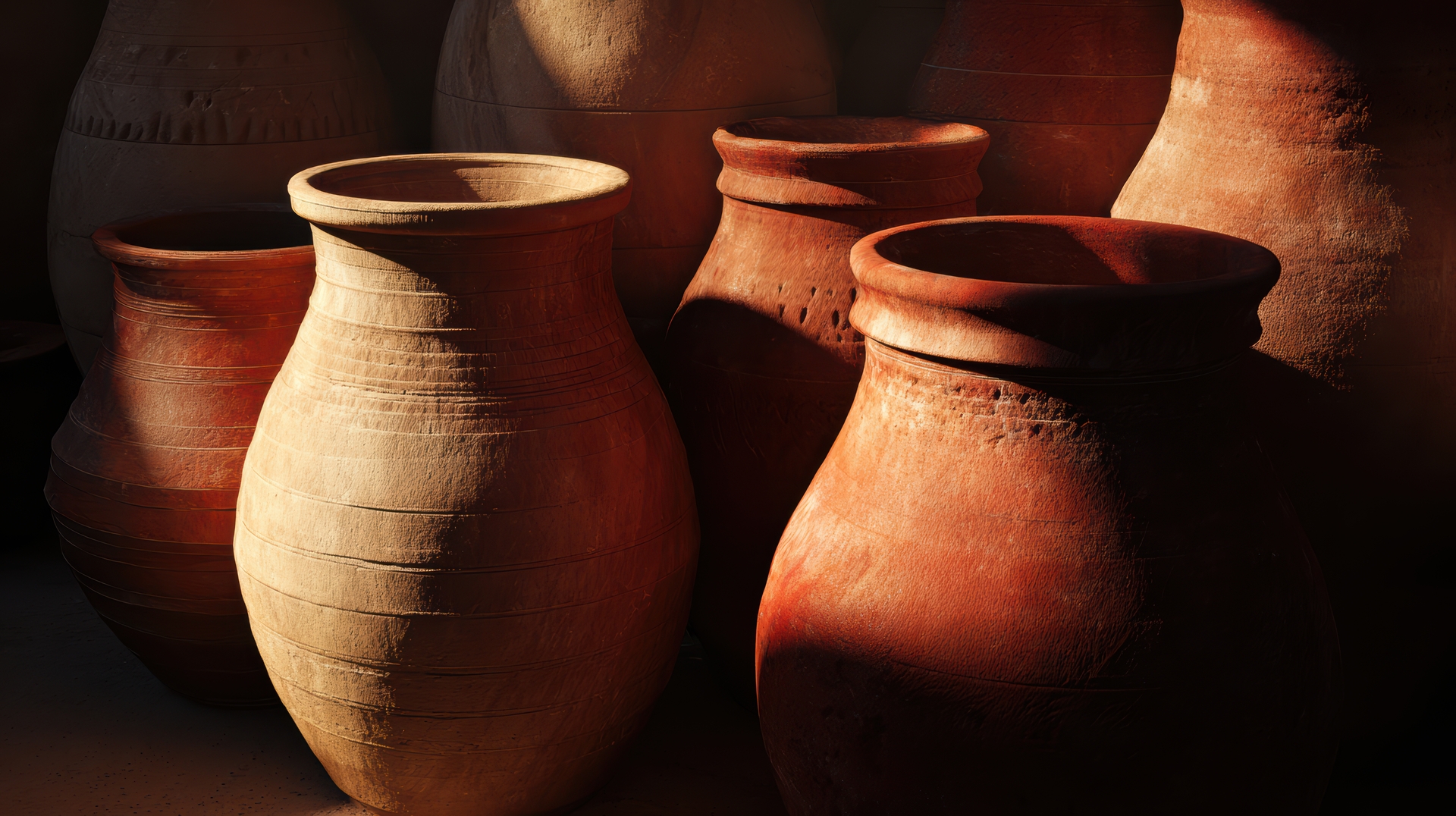
Empty Vessels and the Quiet Work of God
He Formed You to Fill You—So His Spirit Could Move Through an Emptied Vessel
It was an unremarkable afternoon—the kind that slips by quietly. The house was still, and late light spilled through the kitchen window, warm and unhurried. I stood over the recycling bin holding three containers that had reached the end of their usefulness: a small glass jar that once held olives—bitter by nature, softened over time; a small glass jar that once held sweet blueberry jam; and an old lemon juice container, sour and spent. Ordinary objects. Fully used. As I loosened my grip, ready to let them fall to waste, the LORD gently reminded me of the many ways He had used me over the years. I knew I was not finished—but my thoughts turned to those who believe that once they are emptied, they are no longer usable. In that quiet moment, the ordinary scene began to echo a deeper truth I had seen before.
I thought: An empty vessel can be filled. I set them in the sink and turned on the water, rinsing them clean. As the water ran, a familiar prayer of a prophet rose in my heart: “Create in me a clean heart, O God, and renew a right spirit within me.” *(Psalm 51:10) This is not a cry of failure, but a request for readiness—cleansing that prepares a vessel to be filled again. I was reminded of Elisha.
“Elisha told her, ‘Go and ask all your neighbors for empty containers—don’t gather just a few. Then go inside, shut the door behind you and your sons, and begin pouring oil into each one. As each container is filled, set it aside.’” (2 Kings 4:3–4, paraphrased for clarity)
Elisha was not merely solving a crisis of provision; he was also restoring vision. He had much to give, for he came in the spirit and power of Elijah, his mentor (Luke 1:17). Elisha himself had received a double portion from Elijah—a pattern that points beyond a single life, showing how God multiplies His Spirit among many. In this way, His work does not diminish with succession; it expands, filling ordinary vessels so His life continues beyond any one person.
He spoke to a household that had lost its bearings—men and women who still belonged to Yahweh but no longer knew how the future could unfold. He did not search for new vessels or discard the old ones. He called for what was already present: ordinary vessels, familiar vessels, vessels that had once been used in the service of daily life and devotion. They were not cracked. They were not defiled. They were simply empty. And because they were empty, they were ready.
Under Elisha’s leadership, emptiness became capacity. What seemed like a loss became preparation. The oil flowed not to revive the past, but to sustain life and release a future. The vessels were set aside not as relics, but as evidence that God still fills His people—living epistles, read and known, bearing a vision made plain. Perhaps Elisha himself was reminded of a prophecy handed down through Israel’s prophets: “Write the vision; make it plain on tablets, so he may run who reads it.” (Habakkuk 2:2) Vision, once made clear, is meant to be seen and run toward, so others may follow what God has revealed.
Life’s challenging experiences sometimes leave us hollow, a quiet emptiness shaped by loss and disappointment. Life itself can taste bitter, sweet, or even soured by circumstances we never expected. Yet that emptiness is not accidental. It is a perfect disposition for the new wine of the Spirit. In Scripture, wine speaks of life released—joy restored, strength renewed, purpose set in motion. New wine does not mean a different Spirit, but a fresh outworking of the same Spirit who has never left.
What suffering strips away—self‑reliance, false certainty, attachment to former seasons—God uses to enlarge capacity. What trials empty, the Spirit longs to fill again, not with yesterday’s oil for yesterday’s work, but with fresh life for what lies ahead. As Jesus said, “New wine must be poured into new wineskins.” (Luke 5:38) The wine is ready; the question has always been whether the vessel is willing to make room.
Back in the kitchen, as I washed the jars—scraping away residue, peeling off labels, removing the faint traces of what they once carried—I realized those labels had once been helpful. They told us what the container held, how it should be used, and what was expected of it. But over time, the labels we receive begin to describe a former vessel. Our gifts do not change, but our vision widens as we sense how short time truly is. These labels become titles we give ourselves, roles others assign us, expectations we carry long after their season has passed. Some came from calling, some from success, some from disappointment. Slowly, what once named our purpose began to name our limits, until the labels no longer revealed who we were becoming, but who we used to be.
I’ve walked with God long enough to know that fullness and usefulness are not the same thing. A vessel can be full—crowded with activity, memory, reputation, or even past faithfulness—and still miss its purpose. And a vessel can be emptied by life and slowly close in on itself, mistaking transition for an ending. But there is another way. An emptied vessel can trust again. It can release old definitions—how it once served, how it was once seen, how it learned to measure itself—and remain open. Emptiness, rightly received, becomes a doorway. It is not a verdict, but an invitation to let God define the vessel again and prepare it to be filled anew.
I was given vision early—clarity when I was young, direction before I had the wisdom to steward it gently. And with that vision came seasons of both movement and uncertainty. There were long stretches of obedience and disobedience, marked by loneliness, moments of emptiness where the future felt unclear, even while a true north remained fixed in my heart. I kept moving forward, not because I understood what was next, but because I trusted the One who had called me.
There were seasons of discouragement brought on by things in life I never expected, moments when the weight of reality pressed harder than anticipation ever could. There were times I tried to fill the vessel with diversions, with activity or distraction, to quiet the ache of waiting. Yet even then, something held steady beneath it all.
I was constantly reminded. When we give our hearts to Him, He never leaves nor forsakes us (Deuteronomy 31:6; Hebrews 13:5). This is not a feeling; it’s a promise meant to carry us through an entire lifetime.
Still, people forget. We begin to believe we must overcome and become whole on our own, solve our problems, and grow strong again before we can be helpful. But that is not how God works. He does not ask us to repair ourselves—He asks us to yield. He fills slowly, gently, faithfully, bringing life back into places that felt dormant, proving not that we earned His presence, but that He never left us empty in the first place.
And this is often how the emptying ourselves for God happens—not suddenly, not through collapse, but quietly through faithfulness. God fills us for a purpose and uses what He pours into us. The fruit of His Spirit—love, joy, peace, patience, kindness, goodness, faithfulness, gentleness, and self-control—flows from that filling (Galatians 5:22–23). Seasons of life do what they are meant to do.
There is “a time for everything, and a season for every activity under heaven” (Ecclesiastes 3:1). Each appointed moment accomplishes its work before giving way to the next.
Standing there with soap on my hands, the realization carried weight, anchored by Scripture. These were not the containers of an empty life. Nothing God has ever given us is missing. What felt like emptiness in my seasons was the ache that comes when life presses in with disappointment and delay. It was the quiet erosion of certainty. It was the disorientation that accompanies fading vision—when direction blurs, purpose feels distant, and the heart grows weary and alone.
Scripture names this condition clearly: “Where there is no vision, the people perish.” (Proverbs 29:18) Not perish in body, but in hope, in direction, in the inner sense of meaning.
Vision comes from God; His promises were never unfaded or diminished—only obscured by circumstance. Beneath all of it, the Spirit remained—unfaded, undiminished—like a small, steady flame that never went out. A flicker, a still small voice, reminding us that God had not withdrawn, that His Word had not failed, and that His calling had not expired.
In that moment in the kitchen, I didn’t experience absence or emptiness, but a holy space: the place where vision is restored. The threshold between one completed season and another yet to be revealed.
Emty doesn’t *mean ‘finished.’ The containers in the sink weren’t broken. They weren’t brittle. They weren’t abandoned. They were empty—open, clean, available. And I understood something quietly but clearly: the Spirit of Christ had never left these vessels. What had faded was not His presence, but our sense of direction. *
The Lord said to Paul, “My grace is sufficient for you, for My power is made perfect in weakness.” (2 Corinthians 12:9)
God’s grace has always carried us forward. Human strength was never the source, nor did it ever have a rightful place as the foundation. What was happening now—this emptiness, this weakness—was accomplishing something human strength never could. Only God’s strength, moving through a yielded and emptied vessel filled with His Spirit, produces what truly lasts. When strength fades, grace makes room. When you are empty, I fill you. When you are weak, I am strong. What I was experiencing was not a void or abandonment; it was an invitation. Christ had not withdrawn. He was waiting for space—room to move through us again, not merely to restore what was, but to release something greater in Christ.
I thought of the many men and women I know who have walked with God longer than most will ever understand. Faithful disciples. Quiet servants. People who received vision early and carried it for decades. People shaped by trials that humbled them—not theory, but lived pain. Loss. Disappointment. Long obedience through unanswered prayers. Over time, those trials did their work. They did not drive Christ out; they stripped away self-reliance and exposed frailty—not to shame them, but to mature them.
Many of these saints feel empty now. Not cynical. Not bitter. Spent. The strength that once sustained them has given way to wisdom that waits. And it is often here—after strength fades—that God reminds them again: When you are weak, I am strong. When you are empty, I fill you. The Spirit is still within. What wavers is confidence, not calling.
They stand at their own quiet thresholds, wondering if what remains is only rest… or if God might yet pour again.
I’ve found myself speaking the same gentle word to them, and to myself: Let it go. Pour out what remains of the old. Make room.
Not because what came before was wrong. It wasn’t. It was good wine in its time—sweet in what it gave, bitter in what it cost. It nourished others. It sustained communities. It carried weight and purpose. Yet there is a subtle danger for seasoned vessels—to begin living from memory rather than obedience, to keep reaching backward for how God used to move rather than trusting how He moves now. Expectation shifts outward. Attention turns to others. This church has lost the anointing. That movement no longer carries the glory. Complaints rise where calling once lived.
But the Lord speaks more personally than that. He does not say, Wait for them to change. He says, Look at you. I gave you gifts. I entrusted you with My Spirit. You preached. You taught. You healed. You restored. You led. Nothing has been taken from you. The movement did not die because I left—it ended because its season was complete. I never left your vessel. I do not live in the past, and I will not be found by those chasing former experiences. I compel My people toward the future.
So Jesus was clear: “No one pours new wine into old wineskins… New wine must be poured into new wineskins.” (Luke 5:37–38) The question was never where the anointing went. The question was: why did a filled vessel stop believing it could be filled again?
I thought of David—chosen young, anointed early, poured out across decades of obedience, failure, repentance, and mercy. By the time he cried out for renewal, he no longer leaned on strength or reputation. He prayed, “Create in me a clean heart, O God, and renew a right spirit within me.” (Psalm 51:10) God did not discard him. He washed him, restored him, and refilled him.
I thought of the potter’s house, where the prophet watched as the vessel was marred in the potter’s hands. Scripture tells us, “So he reworked it into another vessel, as it seemed good to the potter to do… Like clay in the hand of the potter, so are you in My hand.” (Jeremiah 18:4–6) The clay was not rejected. It was softened.
This is what I sense God doing again—not starting over, but filling again. Not recruiting the strong, but trusting the humbled. Not calling the untested, but the seasoned. Those who know their limits. Those who understand that when they are weak, He is strong—and when they are empty, He fills.
These months have felt like a quiet wilderness—not abandonment, but preparation. Less striving. Less proving. More yielding. Like the voice Isaiah spoke of: “Prepare the way of the Lord; make straight in the desert a highway for our God.” (Isaiah 40:3) Not by returning to yesterday, but by making room for tomorrow.
Because the Spirit still moves like new wine. Jesus revealed this quietly at a wedding, turning water into wine. When the master tasted it, he said, “You have saved the best till now.” (John 2:10) God has always reserved His best for vessels ready to receive it.
Those three containers still sit on my counter—clean, empty, waiting. I don’t know what they’ll hold next. It doesn’t matter. What matters is readiness.
When you are empty, lean in and listen. Emptiness removes distractions and sharpens attention, creating space to hear the still, small voice that speaks through hard‑earned wisdom. When certainty yields, humility takes its place—formed through obedience over time. And what those years of faithfulness reveal is this: your story is not ending; it is just beginning. Christ never left your vessel. Pause. Let Him wash you. Let Him restore your vision. Let Him remind you again: When you are weak, I am strong. When you are empty, I fill you.
God is not finished with you. He does not discard those who have been spent in faithfulness. What you are experiencing is not an ending, but a clearing—space being made for something greater than what came before.
The new wine is already prepared. And the best of the feast may still be ahead.
I am calling out my fellow warriors. The invitation before us now is not to return to youthful striving, nor to cling to former assignments, but to move forward in yielded trust. God has you exactly where He wants you—not depleted, not forgotten, but made ready.
As recorded in the book Rees Howells, Intercessor by Norman Grubb, the life and prayers of Rees Howells reveal a profound spiritual reality: the Holy Spirit does not fill what is crowded or self‑occupied. He fills where room has been made. For Him to come fully in, something of us must go out. This is not loss, but holy exchange. We can receive only as much of the Spirit as our capacity allows—and that capacity is enlarged through surrender, humility, and emptying. God does not withhold Himself; He waits.
An empty vessel is not a sign of failure. It is evidence of preparation. You too are called to carry forward the spirit and power of Elijah (Luke 1:17)—not as a replica of the past, but as a vessel through which God continues His work of reconciliation. Scripture declares, “All this is from God, who reconciled us to Himself through Christ and gave us the ministry of reconciliation.” (2 Corinthians 5:18)
This is the moment to remain open, to yield without fear, and to walk forward with quiet confidence. Not striving, not proving—simply abiding and moving as He leads. Choose to live and grow on purpose.