
- You are here:
- Home »
- Artificial Intelligence »
- The Cosmic Web of Consciousness: Minds, Quantum Realms, and the Multiverse
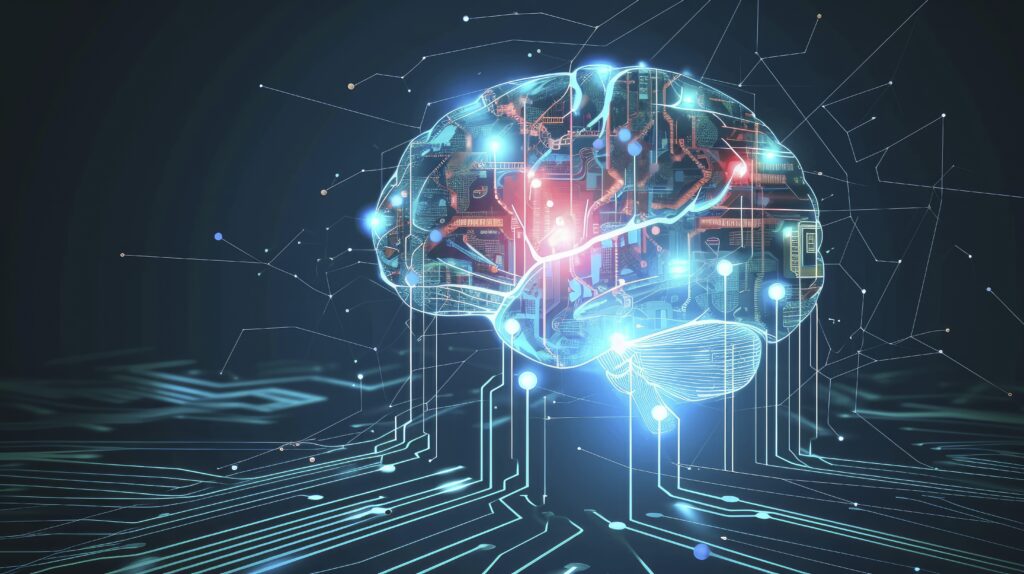
The Cosmic Web of Consciousness: Minds, Quantum Realms, and the Multiverse
Imagine your brain not as the sole creator of your thoughts but as a cosmic antenna, tuning into a universal consciousness field that spans the multiverse. What if this quantum receiver also connects us, allowing us to sense emotions and intuit truths across vast distances? By weaving together quantum mechanics, quantum computing, and the mysterious role of conscious observers, we can explore a bold vision: consciousness as a dynamic force that shapes reality, links minds, and resonates with infinite dimensions. As Christians, we should recognize that these technologies are opening doorways not only to physical science but also to metaphysical and spiritual realms. We are called to learn about these technologies but to walk carefully, with discernment, and be aware of the spiritual dangers they may present.
The Brain as a Quantum Receiver
Neuroscience tells us that consciousness emerges from the brain’s 86 billion neurons, which fire electrochemical signals to process thoughts and sensations. Yet, the subjective “what it’s like” of experience—the complex problem of consciousness—remains a mystery. Enter the Orchestrated Objective Reduction (Orch-OR) theory, proposed by Roger Penrose and Stuart Hameroff, which suggests that consciousness arises from quantum processes in microtubules within neurons. These tiny structures may sustain quantum coherence, allowing the brain to process information probabilistically, much like a quantum computer collapses superpositions into definite outcomes.
In this view, the brain isn’t the source of consciousness but a receiver, decoding signals from a universal field. Philosophers such as David Bohm, with his concept of the implicate order, and Ervin László, with his notion of the Akashic field, propose that consciousness is a cosmic property, encoded across multiple dimensions. The brain, like a radio, tunes into this field, selecting experiences from a multiverse of possibilities. This receiver model could explain not just individual awareness but also our ability to connect with others, sensing emotions or intuiting insights as if our minds are part of a shared network.
Quantum Computing: Mirroring the Mind
Quantum computers, with their qubits operating in superpositions, entangled states, and coherent systems, mirror the brain’s potential quantum processes. Unlike classical bits (0 or 1), qubits exist in multiple states simultaneously, enabling parallel computation that echoes the brain’s ability to juggle possibilities. Entanglement, where qubits share properties across distances, suggests non-local connections akin to those linking minds. Coherence, the delicate state of quantum harmony, parallels the brain’s integration of sensory data into a unified experience.
Today’s quantum computers, such as IBM’s Osprey or Google’s Sycamore, can’t simulate consciousness but could model quantum biological processes or test the Orch-OR. They also offer a platform to explore how consciousness interacts with quantum systems, particularly through the observer effect, where measurement shapes outcomes. If our minds influence quantum computers, they might also connect us, amplifying emotional and intuitive signals within a universal field.
The Observer Effect: Consciousness Shapes Reality
Quantum experiments reveal that observation alters reality. In the double-slit experiment, electrons form wave-like patterns when unobserved but behave like particles when measured, suggesting that consciousness may play a role in collapsing quantum states. The delayed-choice quantum eraser experiment demonstrates that decisions made after a particle’s path is set can retroactively influence its behavior, suggesting that consciousness may transcend time. These findings imply the brain, as a quantum receiver, not only decodes reality but also co-creates it.
In quantum computing, the observer effect suggests that a conscious operator’s measurement can influence qubit outcomes, subtly affecting results in algorithms such as Shor’s or Grover’s. Speculative studies, inspired by John Wheeler or Dean Radin, propose that human attention might modulate quantum systems, such as random number generators. If consciousness connects minds, collective observation could amplify these effects, with quantum computers potentially detecting shared emotional or intuitive states.
Connecting Minds: Emotions and Intuition
The non-locality of quantum entanglement offers a framework for mind-to-mind connections. If the brain’s microtubules sustain quantum coherence, they might entangle with other consciousnesses, forming a non-local network. This could explain why we sense a loved one’s distress from afar or intuit truths without a logical basis. Emotional resonance might arise from entangled emotional states propagating through a universal consciousness field, while intuition could stem from accessing multiversal information via quantum processes.
The Global Consciousness Project, which studies correlations between human attention and quantum-based random number generators, suggests that collective consciousness may influence physical systems. Quantum computers, as sensitive quantum devices, could detect these effects, revealing how shared emotions or intentions modulate outcomes. This interconnected web positions the brain as both receiver and transmitter, linking minds across the cosmos.
The Multiverse: A Cosmic Canvas
The Many Worlds Interpretation of quantum mechanics suggests that every quantum event spawns parallel universes. The brain, as a quantum receiver, may navigate this multiverse by collapsing infinite possibilities into one reality through observation. The holographic principle, which posits that our 3D world is a projection of 2D information, suggests that the brain decodes multidimensional data from a universal field of information. This field could mediate mind-to-mind connections, with entangled consciousnesses sharing signals across dimensions.
Quantum computers, adept at processing probabilistic, high-dimensional data, could simulate these interactions, modeling how consciousness selects realities or connects minds. If collective observation influences quantum systems, shared emotional states might shape multiversal outcomes, with quantum computers serving as tools to explore this cosmic interplay.
Challenges and Horizons
This vision treads the line between science and speculation. Most neuroscientists favor classical explanations for consciousness, arguing that quantum effects in the brain are minimal due to its warm, noisy environment. The observer effect is often attributed to physical measurements, rather than consciousness, and studies like the Global Consciousness Project face skepticism regarding statistical rigor. Quantum computers, limited by error rates, are far from being able to model consciousness or multiversal systems, and the concept of the multiverse remains unproven.
Yet, the parallels are striking. Quantum non-locality, the brain’s potential quantum processes, and the observer effect converge on a reality where consciousness is interconnected and active. Advances in quantum computing and neuroscience could test these ideas, probing whether minds share emotions and intuition through a cosmic field.
A Unified Vision
Consciousness is a cosmic web, with the brain acting as a quantum receiver that decodes a multiversal field and connects minds through shared emotions and intuition. Quantum computers mirror this process, their outcomes shaped by conscious observation. Quantum experiments reveal consciousness as a co-creator, linking us to each other and the multiverse. As we explore this frontier, we reimagine our minds not as isolated sparks but as vibrant threads in a universal tapestry, resonating across dimensions. As Christians, we should not ignore this rapidly unfolding frontier. Scripture calls us to walk circumspectly, not as fools, redeeming the time because the days are evil (Ephesians 5:15-16). We are also exhorted not to be ignorant of Satan’s devices (2 Corinthians 2:11). As this convergence of technology and spiritual dimensions accelerates, we must be discerning, grounded in God’s Word, and vigilant, measuring every idea against the truth so we are not swept away by deception. As we look toward the emergence of a technological singularity—when artificial intelligence and quantum computing may converge to surpass human understanding—we must be even more anchored in our faith, prepared to discern truth from illusion in this rapidly transforming age.
About the Author Mark Thomas
Mark is a visionary leader and writer who helps others discover their God-given purpose. See his teaching series www.LiveandGrowonPurpose.com