
- You are here:
- Home »
- Leadership »
- The So-Called Franchising Scam
The So-Called Franchising Scam
Once ridiculed as a “scam” and dismissed as a deceptive scheme, franchising is now widely recognized as one of the most brilliant business concepts of the modern era.
Decades ago, however, the perception was radically different. As author John Milton Fogg observed, “In most Americans’ minds, it’s a ‘scam’ and a ‘scheme’—questionable or unethical at best, immoral and illegal at worst.” The skepticism was widespread. Newspapers ran exposés, television programs sounded alarms, and public opinion leaned hard against what many misunderstood as a pyramid of false promises.
Why all the pushback?
Because franchising disrupted the status quo. It challenged traditional, top-down, industrial-age models that centralized wealth and power in the hands of corporate giants. Franchising handed the tools of enterprise to the common man. It offered a new path: not just employment, but ownership. And that made institutions nervous. So much so, Congress even considered outlawing it.
Before household names like Pizza Hut and McDonald’s legitimized the model, franchising was a lightning rod for criticism. But what many failed to grasp then—and what we now understand—is that franchising democratized business. It allowed everyday individuals to bypass the chaos and cost of starting a business from scratch. With a proven product or service, established systems, marketing, training, and operational blueprints, a franchise became more than a business opportunity—it became a turn-key solution.
Why does this matter?
Because the odds are stacked against the average entrepreneur, roughly 80% of small businesses fail within their first year. Of those that survive, another 80% don’t make it past year five. And only a fraction remains after a decade. Franchising flips those odds. It empowers business owners with a plug-and-play framework that reduces risk and increases efficiency. It’s a business in a box—with support, branding, and strategy already built in.
Think of it this way: virtually anyone with the desire and the startup capital can climb into the franchise vehicle, turn the key, and drive down the highway of entrepreneurial success.
A Bit of History
Modern franchising gained traction in the 1930s, when fast-food restaurants like A&W Root Beer led the charge. As America’s interstate highway system expanded, so too did the demand for consistent, recognizable food and lodging. Franchised motels and quick-service restaurants boomed.
Then came a visionary named Ray Kroc.
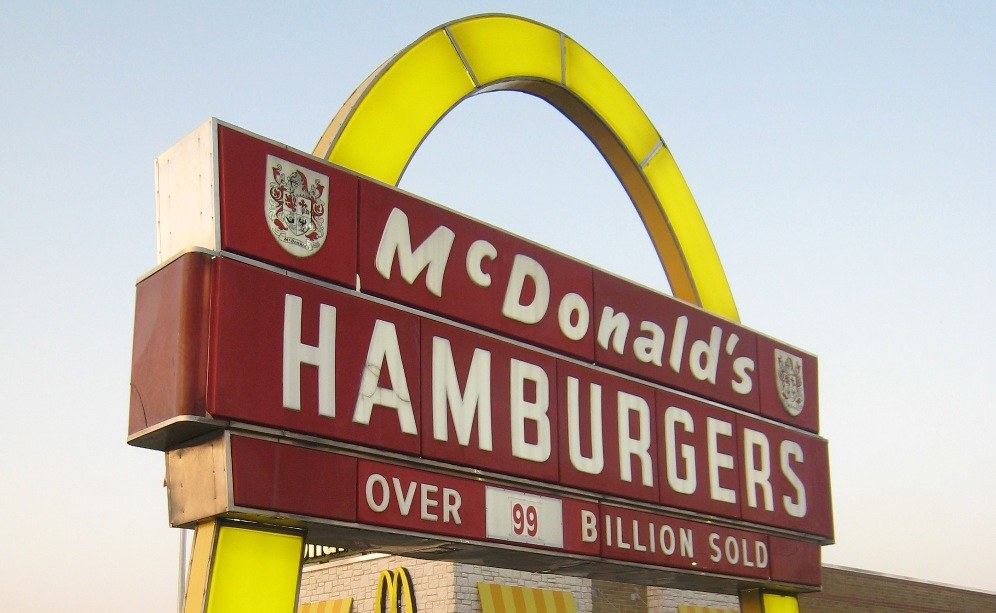
In 1955, Kroc founded McDonald’s Corporation, transforming a modest burger stand into a global powerhouse. But it wasn’t just the burgers—it was the system. Kroc understood that simplicity and consistency were scalable. He refined McDonald’s into a franchise model that could be duplicated with precision, from Des Moines to Dubai. At one point, McDonald’s stopped counting burgers after hitting the 99 billion mark in 1994. Today, it’s estimated that the company serves more than 75 burgers every second, totaling nearly 300 million annually worldwide.
And that’s just one example.
Thousands of franchises now thrive across industries—from fast food and fitness to financial services and home repair. The so-called scam? It turned out to be a revolution.
So, the next time you hear someone echo those outdated suspicions, remember this: franchising didn’t just survive the criticism—it turned it into fuel. It built a bridge between big business systems and small business dreams. And it continues to pave the way for anyone willing to take the wheel.
So much for the franchising scam.
About the Author Mark Thomas
Mark is a visionary leader and writer who helps others discover their God-given purpose. See his teaching series www.LiveandGrowonPurpose.com